American Mambo
Also known as: American Rhythm Mambo, Swing Mambo
History & Cultural Context
American Mambo emerged in the United States during the 1950s-1970s as American dancers adapted Cuban mambo traditions for American rhythm competition. While maintaining the characteristic syncopated rhythms and sharp action, American Mambo allows for greater separation and more varied choreography than traditional Cuban mambo. Though less prominent than other American Rhythm dances, Mambo represents an important link between American competition and Cuban musical traditions.
Cultural Significance
American Mambo represents American adaptation of Cuban traditions within competitive ballroom, though it remains less popular than other American Rhythm dances.
Characteristic Movement & Technique
American Mambo is characterized by quick, energetic footwork with characteristic Cuban motion and lively rhythm. The fundamental action employs rapid weight transfers with quick, bouncy feet and pronounced hip movement from the Cuban-derived footwork. The dance emphasizes fast-paced travel and rapid directional changes. The hips move prominently as part of the dance's character. The upper body remains relatively controlled despite energetic lower body movement. The overall impression is of energetic, playful Latin movement.
Partnering Dynamics
American Mambo partnerships emphasize energy, responsiveness, and playful interaction. Partners dance in open position with flexible frame. The connection is maintained through light frame and directional awareness. The leader initiates energetic patterns and directional changes. The follower matches the leader's energy. Hand releases and reconnections are frequent. The best partnerships display fun, responsive coordination.
Competitive Context
American Mambo is competed in American Rhythm competitions at amateur levels. Judges evaluate on technical execution, energy, Cuban motion, and choreography. Competition tempos are fast, typically around 50 BPM. American Mambo emphasizes energetic presentation and artistic interpretation. Successful competitive Mambo requires strong Cuban motion technique and sustained energy.
Regional Variations
American Mambo reflects Cuban dance influences within American ballroom traditions. Coaching schools emphasize energetic execution and Cuban rhythm interpretation. Regional variations in choreographic style exist.
Common Misconceptions
Beginners often confuse Mambo with Salsa, applying inappropriate footwork. Another error is over-emphasizing hip movement. Some dancers move with insufficient energy or rhythm precision.
Peak Popularity
Signature Figures
- Basic Step
- Forward Break
- Cross Break
- Hip Twist
Notable Codifiers
- American ballroom teachers
- Arthur Murray
- DVIDA (Dance Vision International Dance Association)
- NDCA (National Dance Council of America)
- Arthur Murray International
- Fred Astaire Dance Studios
Dance Lineage
Track Your American Mambo Progress
Practice American Mambo figures between lessons with Figure Focus — step-by-step breakdowns, floor diagrams, and progress tracking. Free to use.
What to Wear
Attire guidance for American Mambo and other American Rhythm dances. Each card below is sized to the moment — class, practice, social, or competition — because the wardrobe shifts as the stakes do.
Reading the cards
In Class
Comfortable clothing that allows free hip movement. Fitted tops, stretchy pants or dance skirts. Layers for warm-up.
Social Dancing
Smart casual to dressy. For women: cocktail dresses, dance skirts, or fitted separates. For men: dress shirts, slacks, or dark jeans with a nice top.
Competition
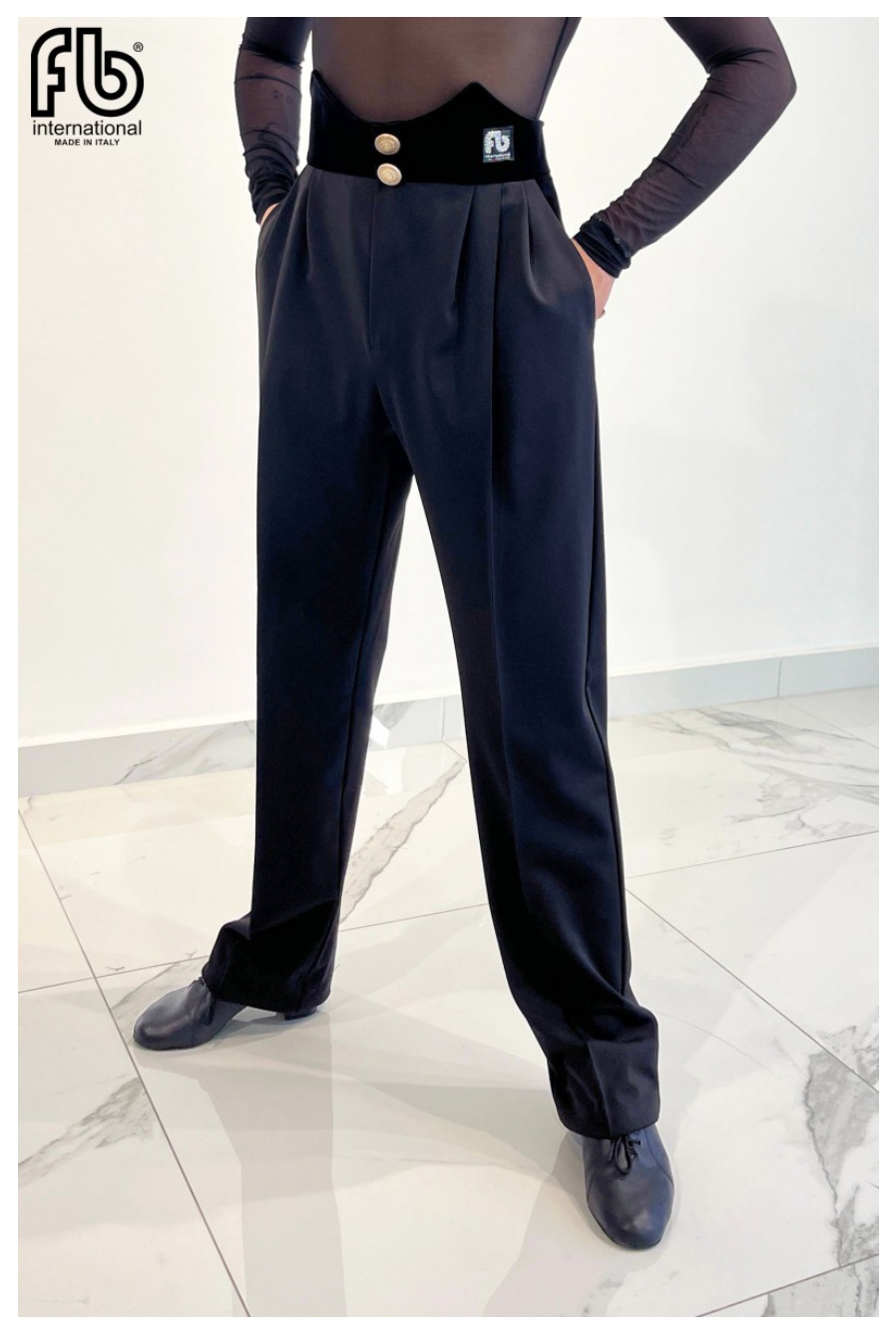
Women: Latin-style dresses with embellishments, fringe, or sequins — shorter hemlines to showcase leg action. Men: fitted Latin shirts (often open-collared or V-neck) with high-waisted trousers. Both: costumes become more elaborate at higher levels.
Shoes
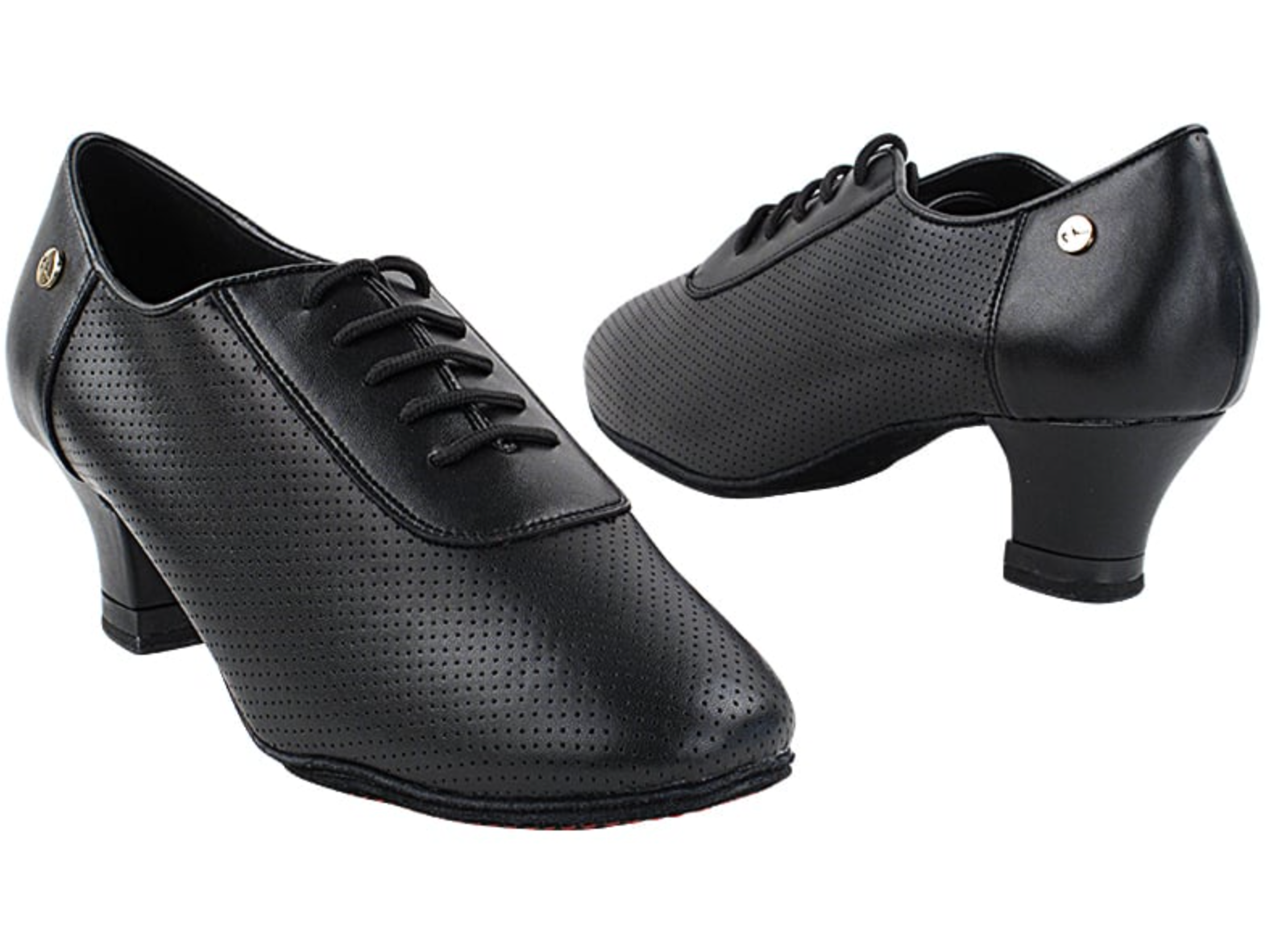
Women: open-toe Latin sandals with 2.5–3" heels and suede soles. Men: Latin dance shoes with 1.5" Cuban heels. Suede soles are essential for controlled pivoting.
In Practice
More serious than class but less polished than social. Form-fitting practice wear that lets a teacher or partner see hip and ribcage articulation: tight tank or crop, fitted leggings or short practice skirt, low Latin practice shoe. Bring a separate pair of clean dance shoes for studio floors.
By Role
Leaders
Class: Fitted T-shirt or Latin practice shirt tucked into stretchy trousers. Avoid loose button-downs — leaders need their torso line legible to followers and instructors.
Competition: Fitted Latin shirt (open collar or V-neck), high-waisted trousers held by suspenders or elastic waistband — never a belt. American Rhythm allows slightly looser sleeves and an optional vest layer for Rumba/Bolero. Off-the-rack dress shirts and suit trousers will untuck and bunch — do not substitute.
Followers
Class: Fitted top with stretchy pants or short practice skirt. Hip scarf optional but useful for early Cuban motion training.
Competition: Short, fitted, embellished dress with fringe, crystals, or asymmetric drape. American Rhythm leans softer than International Latin — more drape, more flowing handkerchief hemlines, more skirt float for the slow Rumba. Skin-toned underlayment becomes standard at higher levels for structural support and silhouette continuity.
Common Pitfalls
- ✗Wearing a normal dress shirt and suit trousers — they untuck, bunch, and restrict shoulder movement.
- ✗Buying International Latin shoes by mistake; the Rhythm heel is half an inch lower (2.5–3" vs 3–3.5") and the geometry differs.
- ✗Loose, draped tops that hide hip and ribcage articulation from judges and instructors.
Price Range
- Budget: Practice wear $30–80 total; entry-level Latin shoes $80–130 (Capezio, Very Fine, So Danca).
- Mid: Off-the-rack competition dresses or men's Latin shirts $300–800; mid-tier shoes $150–250 (Supadance, International Dance Shoes).
- Premium: Custom dressmaker gowns $2,000–5,000+; bespoke men's Rhythm shirts and trousers $400–900; premium shoes $250–400.
Key Terms
- Cuban heel
- 1.5" angled heel on men's Latin shoes — sets the foot at the geometry the technique was designed for.
- Skin-toned underlayment
- Nude mesh inserts at chest/back/sides/thighs that turn cutouts into structured panels and anchor the dress during fast spins.
- Float
- Layers of soft fabric in the skirt that travel through the air in a controlled wake behind the moving dancer.
Quick Tips
- •Suede-soled shoes allow controlled sliding and pivoting — essential for most partner dances.
- •Avoid rubber soles on dance floors; they grip too much and can cause knee injuries.
- •Bring a separate pair of clean shoes for the dance floor to keep it in good condition.
Recommended Gear for American Mambo
Essential equipment and apparel selected for dancers learning American Mambo.
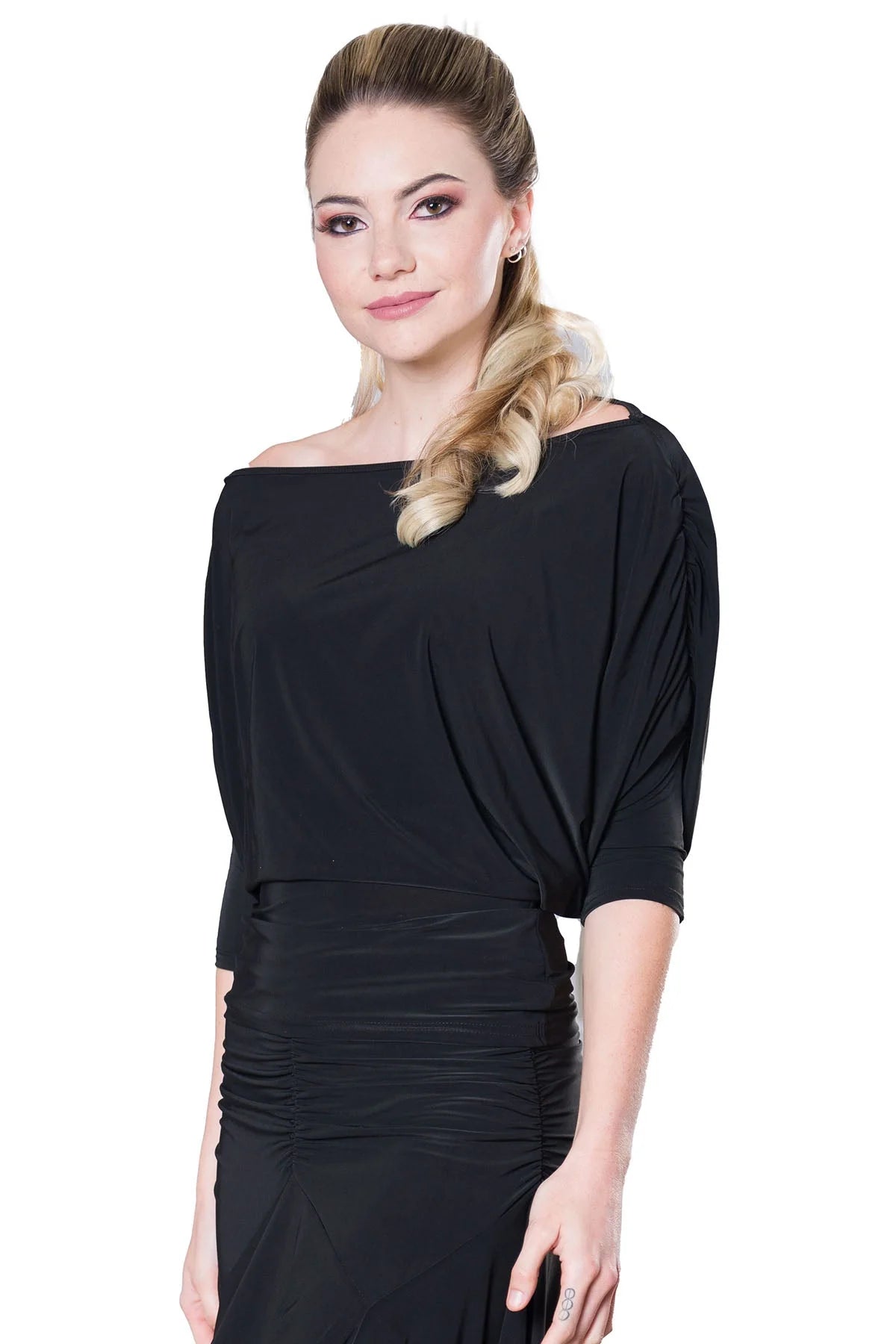
Women's Ballroom, Latin, American Rhythm, Tango, Salsa Dress Top
Lets Dance Store
$100–$200
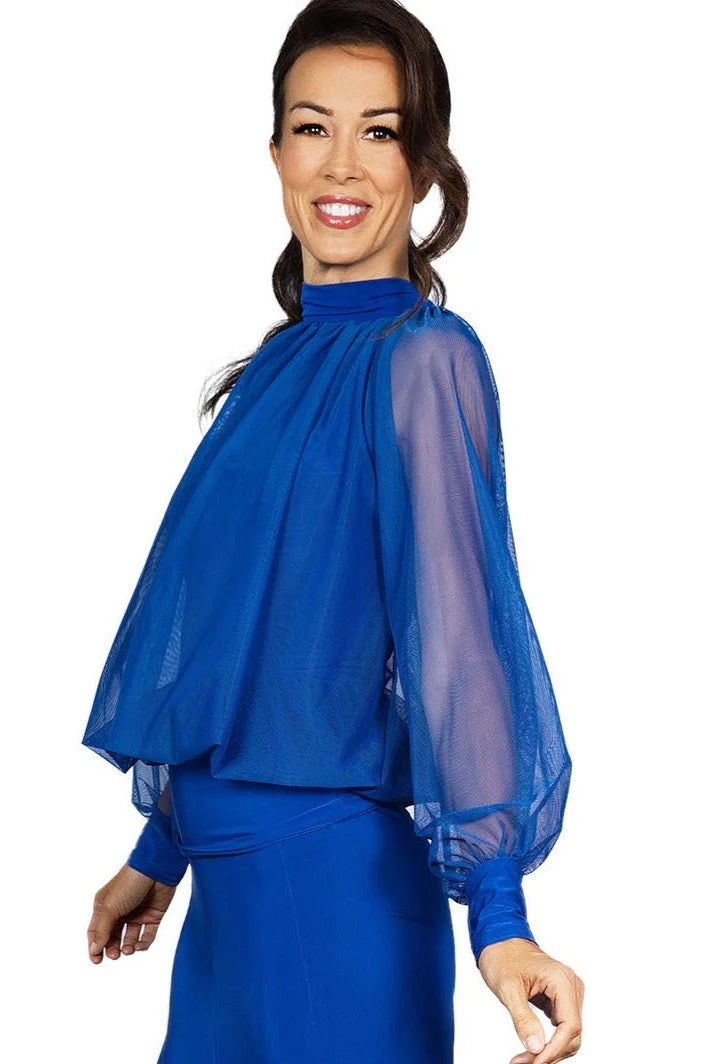
Women's Ballroom, Latin, American Rhythm, Tango, Salsa, Practice Demure Powermesh Top
Lets Dance Store
$100–$200

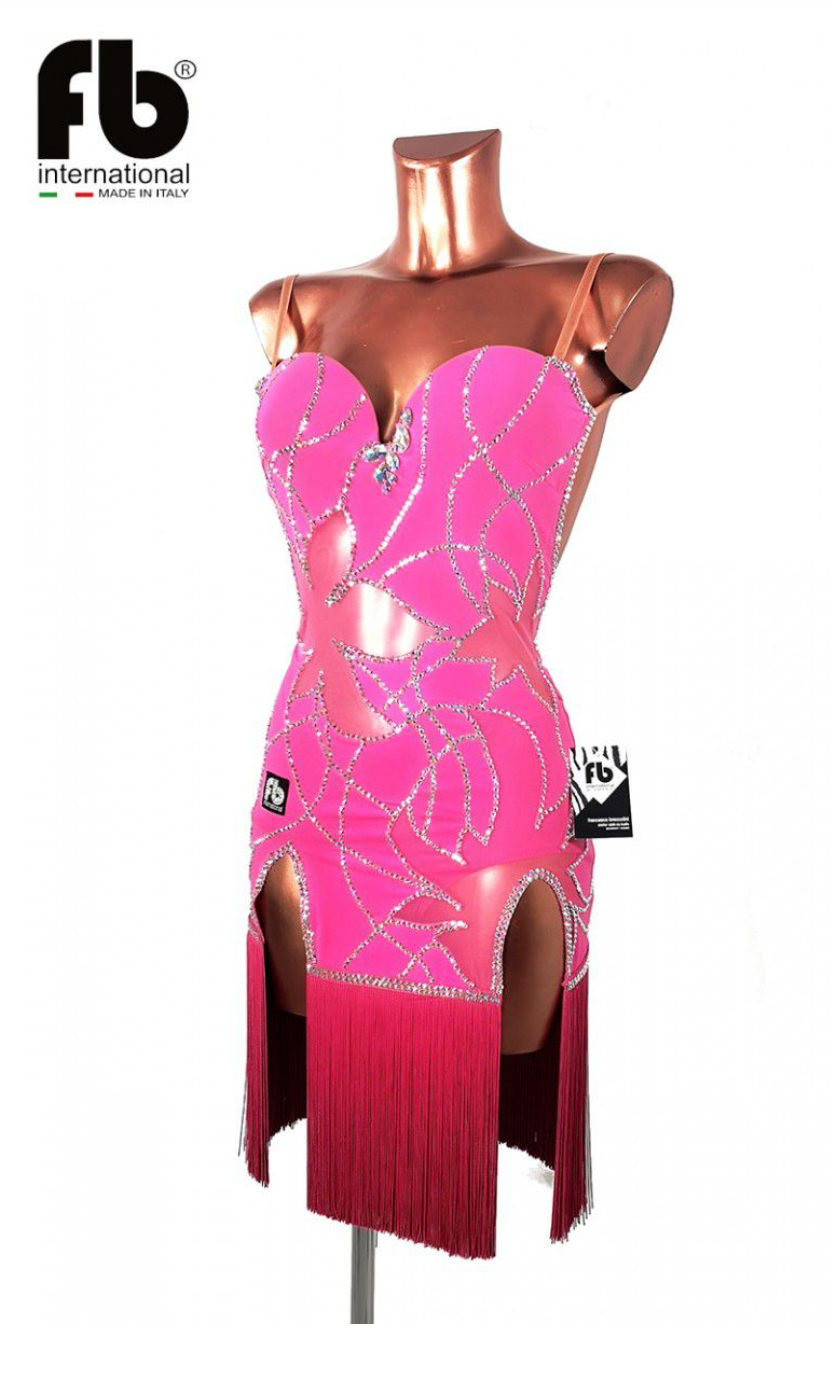
Women's International Latin, American Rhythm Dress Brand New Made to Order Color Fuchsia
Lets Dance Store
$400+
As an Amazon Associate, LODance earns from qualifying purchases. Affiliate disclosure
Sources & Further Reading
Syllabi (instructional standards, not citable sources)
Competitive technique and choreographic standards are maintained by:
- • ISTD (Imperial Society of Teachers of Dancing) and WDSF (World DanceSport Federation) official syllabi and technique manuals
- • DVIDA (Dance Vision International Dance Association) materials for American dance variants
- • USA Dance and other national governing body resources
- • WDC (World Dance Council) competition rules and adjudication standards
Cultural & Historical Context
American Mambo emerged from United States during the 1950s—1970s. Understanding the cultural roots, musical traditions, and social circumstances of this era enriches appreciation for the dance's characteristics and significance.
Formative Influences
Codifiers & Standardizers:
American ballroom teachers, Arthur Murray, DVIDA (Dance Vision International Dance Association), NDCA (National Dance Council of America), Arthur Murray International, Fred Astaire Dance Studios
Signature Movement Vocabulary:
Basic Step, Forward Break, Cross Break, Hip Twist
Primary Source Documents
The Library of Dance contains public-domain primary sources for dance history. Copyrighted modern syllabi are indexed with purchase links to their respective copyright owners. Search by dance name or codifier to discover primary source documents.
Last reviewed: July 2026 — This dance profile synthesizes historical research, cultural documentation, and contemporary practice knowledge to provide authoritative context.
More in American Rhythm
American Cha-Cha
American Cha-Cha adapted the Cuban Cha-Cha for American rhythm competition, maintaining Cuban motion while emphasizing hip action and allowing for greater separation and choreographic freedom.
American Rumba
American Rumba adapted Cuban rumba for American rhythm competition, emphasizing hip action and Cuban motion while allowing greater partner separation and choreographic flexibility.
American East Coast Swing
East Coast Swing is a standardized American competition swing dance featuring quick rhythms and energetic leg action, derived from 1930s-1940s swing traditions.
American Bolero
American Bolero is a slower, romantic rhythm dance developed for American competition, emphasizing cuddling position and contemporary styling while maintaining Latin character.
What did dancers wear?
American Mambo belongs to the Modern Competition (1950s–present) era. See how attire shaped the choreography — and the other way around.
Explore Modern Competition attire →Our Library of Dance corpus skews to historical public-domain sources (pre-1925). Modern competitive technique citations require additional rights-cleared sources — see roadmap.
Continue Exploring
Lineage of Dance
Explore 500 years of dance evolution
Champions of Dance
Winners of marquee national & world titles
Language of Dance
400+ dance terms & translations
Listening of Dance
Tempo, timing & musicality tools
Gallery of Dance
1,200+ public domain artworks
Attire of Dance
Evolution of dance dress across eras