American Foxtrot
Also known as: American Smooth Foxtrot
History & Cultural Context
American Foxtrot developed in the United States as ballroom dancers adapted the International Standard foxtrot for American social and competitive preferences. American Foxtrot allows for more separation between partners, greater freedom of movement, and emphasis on smooth traveling action. The dance became popular in American ballrooms during the 1920s-1960s and remains central to American Smooth competition. Unlike International Standard's stricter frame requirements, American Foxtrot permits open positions, promenades, and theatrical variations. The formalization of American Smooth as a competitive category provided a venue for these more flexible interpretations.
Cultural Significance
American Foxtrot represents the American ballroom tradition's emphasis on theatrical presentation and individual expression. Fred Astaire popularized distinctive American Foxtrot interpretations in Hollywood musicals. The dance remains central to American Smooth competition and social ballroom traditions.
Characteristic Movement & Technique
American Foxtrot shares International Standard Foxtrot's fundamental feather action and smooth, continuous traveling action, but permits open positions and greater separation. The characteristic smooth, gliding action travels around the dance floor in continuous patterns, with footwork progressing down the line of dance or traveling across the floor. The dance maintains the smooth, refined quality of Slow Foxtrot but permits promenade position, open positions, and choreographic variations. The feet typically employ heel-leading footwork with smooth, continuous action. The rise and fall action is subtle and continuous rather than pronounced in specific beats. The upper body remains relatively still, with movement generated from smooth leg action and traveling patterns. The characteristic American aesthetic emphasizes continuous smooth movement with creative choreographic possibilities. The frame may range from closed position to fully open, with smooth transitions between frames. The overall impression is of fluid, sophisticated movement with greater freedom than International Standard Foxtrot.
Partnering Dynamics
American Foxtrot partnerships emphasize smooth connection and responsive leading while permitting greater separation and independence than International Standard. Partners may dance in closed position with contact similar to International Standard, or in open positions with frame maintained through arm and hand connection. The leader maintains directional intent and timing, which the follower interprets through frame and visual awareness. The frame may range from extended arms to more compact positions, depending on choreography. The follower responds to the leader's direction while potentially moving semi-independently in open positions. The partnership creates an impression of sophisticated, smooth interaction. Unlike International Standard's constant closed position contact, American Foxtrot permits varied frame relationships. The best American Foxtrot partnerships display smooth transitions between frames, responsive leading and following, and polished execution.
Competitive Context
American Foxtrot is competed in American Smooth competitions at all amateur levels, organized by NDCA and DVIDA. Judges evaluate the dance on technical execution within American Smooth rules, floor craft, choreography, and musicality. Competition tempos for American Foxtrot typically range from 120-128 BPM, creating the smooth, refined pace characteristic of the dance. American Foxtrot competitions showcase dancers' choreographic creativity and frame flexibility alongside technical skills. The dance is frequently featured in professional showcases. Successful competitive American Foxtrot requires strong fundamental technique, smooth floor craft, and creative choreography.
Regional Variations
American Foxtrot developed distinctly from International Foxtrot, reflecting American dance traditions. American coaches emphasize smooth, flowing movement and creative choreography. Regional variations exist in frame preferences, with some schools emphasizing more extended, open positions while others prefer tighter frame connections. American Smooth competitors from different regions may emphasize different choreographic styles and frame relationships. In social dance contexts, American Foxtrot reflects regional American ballroom traditions. The distinction between International and American Foxtrot permits two parallel traditions with different aesthetic emphases.
Common Misconceptions
Beginners sometimes confuse American Foxtrot with International Foxtrot, assuming minimal differences; in reality, open positions and frame flexibility create fundamentally different choreographic and partnering possibilities. Another error is assuming American Foxtrot is 'easier' due to open positions; in reality, managing smooth frame transitions requires sophisticated technique. Some dancers produce choppy transitions between closed and open positions rather than seamless, flowing connections. The frame flexibility is sometimes misunderstood as permitting loose connection; frame must remain responsive even in open positions. Many dancers underestimate the importance of smooth, continuous traveling action, producing movement that appears disconnected or stop-and-start rather than flowing. Some view American Foxtrot as simply 'International Foxtrot in open position,' missing the distinct choreographic and stylistic possibilities.
Peak Popularity
Signature Figures
- Feather Step
- Three Step
- Hover
- Weave
- Promenade
Notable Codifiers
- Fred Astaire
- Arthur Murray
- American ballroom teachers
- DVIDA (Dance Vision International Dance Association)
- NDCA (National Dance Council of America)
- Arthur Murray International
- Fred Astaire Dance Studios
Dance Lineage
Track Your American Foxtrot Progress
Practice American Foxtrot figures between lessons with Figure Focus — step-by-step breakdowns, floor diagrams, and progress tracking. Free to use.
Watch American Foxtrot
American Smooth Bronze Foxtrot — Richard Booth
What to Wear
Attire guidance for American Foxtrot and other American Smooth dances. Each card below is sized to the moment — class, practice, social, or competition — because the wardrobe shifts as the stakes do.
Reading the cards
In Class
Comfortable, unrestricted clothing. Women: practice skirts or stretchy pants with a fitted top. Men: trousers and a tucked shirt or fitted T-shirt.
Social Dancing
Semi-formal to formal. Women: flowing dresses or gowns that allow open movement and turns. Men: dress shirt and slacks, or a stretch sport coat. Avoid stiff off-the-rack suit jackets — they restrict shoulder movement and spoil your frame.
Competition
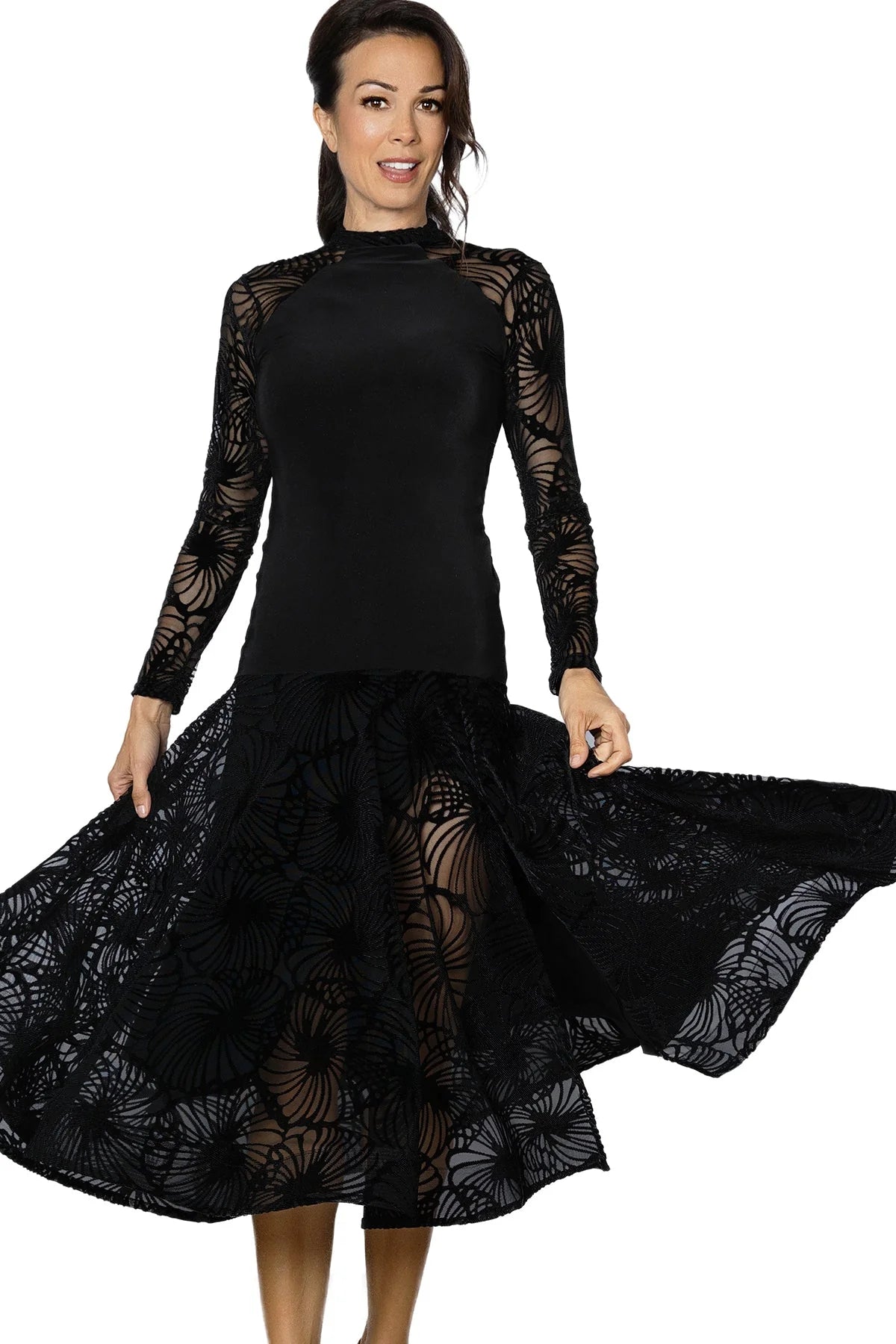
Women: elegant ballgowns with float — the skirt must move beautifully during open work, spins, and shadow positions. Unlike International Standard gowns, Smooth dresses never have wings (fabric panels attached at the wrists/arms), because wings interfere with tandem work, side-by-side choreography, and turns. Men: custom "smooth suits" — suit jackets with stretch fabric, specifically tailored for dance movement. Do not wear a normal suit or tuxedo: off-the-rack formalwear is cut for standing, not dancing, and will bunch at the shoulders and restrict your frame. A proper smooth suit jacket moves with you.
Shoes
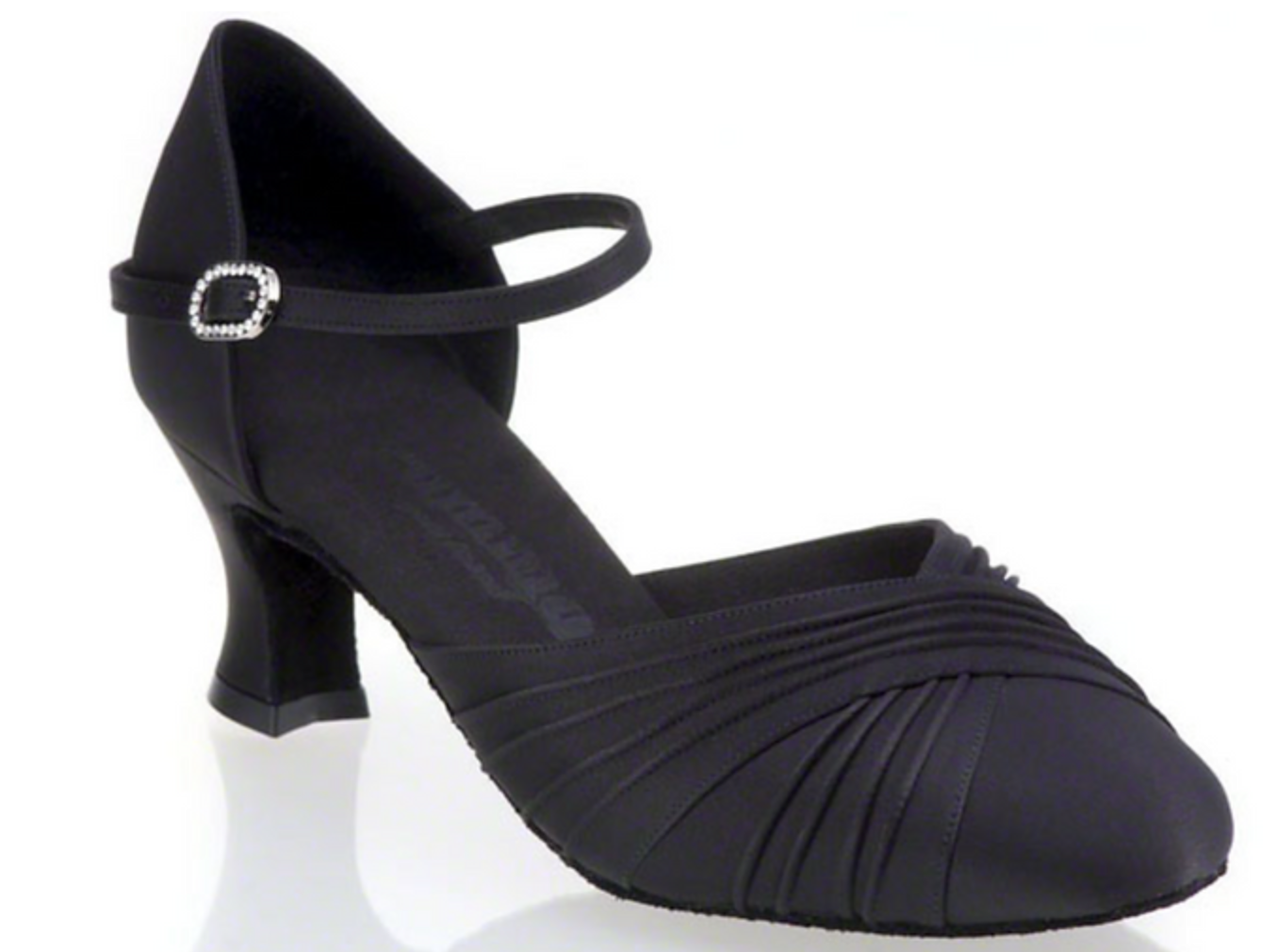
Women: closed-toe or open-toe court shoes with 2–2.5" heels, suede soles. Men: Standard ballroom shoes with a low (1") heel. Smooth sole for gliding.
In Practice
Practice skirt that mimics gown weight (so followers learn to manage float during open work), fitted top, low court heel for women. Leaders in stretch trousers and a tucked shirt — Smooth practice should rehearse in something close to the line a smooth-suit jacket creates.
By Role
Leaders
Class: Fitted shirt tucked into stretch trousers. A practice vest can stand in for the smooth suit jacket when working on frame.
Competition: Custom smooth suit — a dance jacket cut from stretch fabric, more contemporary than a tailsuit, often without tails. Some smooth suits are short and trim like a modern dinner jacket; others use longer skirting closer to a frock coat. Stretch panels under the arms and across the back let the jacket open with the body during shadow walks and tandem turns. Off-the-rack tuxedos collapse the line and trap the shoulders — a smooth suit is a different garment.
Followers
Class: Fitted top with a practice gown skirt that has real weight to it — Smooth choreography sweeps the skirt through bigger arcs than Standard, and the body learns that with fabric to manage.
Competition: Wingless ballgown with heavy float in the skirt and a clean upper body. Sleeves are cap-length, three-quarter, sleeveless, or sheer mesh — never wings. Wings would catch the leader's hand during a hand change, drag across the face during a spin, and restrict open arm extensions. Color and styling skew warmer and more individual than Standard.
Tailsuit vs Smooth Suit · Wings vs No Wings
International Standard vs American Smooth
International Standard
- ◆Leader: Tailsuit (white tie). Tailcoat with stretch panels — not a tuxedo.
- ◆Follower: Ballgown with wings — fabric panels at wrist or upper arm.
- ◆Frame: Permanent closed hold — wings work because frame never breaks.
American Smooth
- ◆Leader: Smooth suit — stretch dance jacket, often without tails.
- ◆Follower: Ballgown without wings — arms must be free to leave the frame.
- ◆Frame: Opens for tandem walks, shadow positions, and free turns.
American Smooth and International Standard share four dances (Waltz, Tango, Foxtrot, Viennese Waltz) and almost nothing else. Standard's wardrobe (tailsuit, winged gown) supports a permanent closed hold. Smooth's wardrobe (smooth suit, wingless gown) supports choreography that breaks the frame on purpose — open work, tandem walks, shadow positions, and free turns. Wearing a Standard tailsuit or a winged gown to a Smooth event will look out of place at best, and will tangle your own choreography at worst.
Common Pitfalls
- ✗Wearing an off-the-rack tuxedo: shoulders bunch, chest pulls tight, frame collapses on raised arms.
- ✗Wearing a winged Standard gown to a Smooth event — wings will catch on the leader's hand during hand changes and drag during free turns.
- ✗Borrowing a Standard tailsuit; Smooth suits are cut differently for the open phases of the dance.
- ✗Wearing a belt with the trousers — creates a horizontal break in the line; use suspenders instead.
Price Range
- Budget: Practice gown skirt $80–150; entry men's stretch trousers and tucked shirt $100–200; entry court shoes $90–140.
- Mid: Off-the-rack smooth suits and gowns $800–2,500; mid-tier shoes $150–250.
- Premium: Bespoke smooth suit $1,500–3,500; custom Smooth gown $3,000–8,000+; premium ballroom shoes $250–400.
Key Terms
- Smooth suit
- Custom dance jacket in stretch fabric — more contemporary than a tailsuit, often without tails. The men's competition garment for American Smooth.
- Wings (and why Smooth has none)
- Fabric panels attached at wrist or upper arm. Standard gowns use them; Smooth gowns never do because Smooth choreography breaks frame and wings would tangle.
- Float
- Layered soft fabric in the gown's skirt that creates a controlled wake during travel — Smooth often uses heavier float than Standard because the choreography sweeps the skirt through bigger arcs.
Quick Tips
- •Suede-soled shoes allow controlled sliding and pivoting — essential for most partner dances.
- •Avoid rubber soles on dance floors; they grip too much and can cause knee injuries.
- •Bring a separate pair of clean shoes for the dance floor to keep it in good condition.
Recommended Gear for American Foxtrot
Essential equipment and apparel selected for dancers learning American Foxtrot.
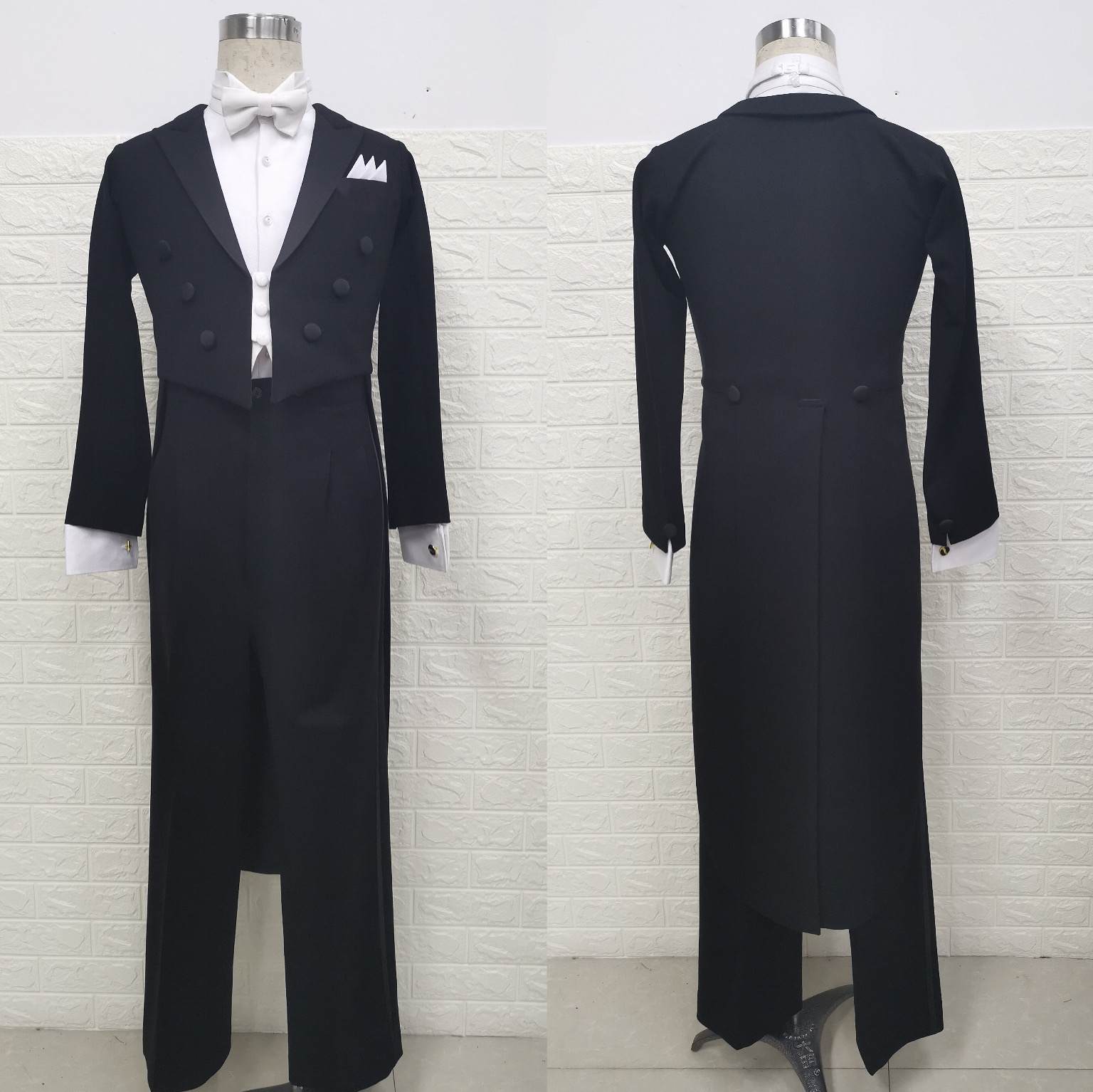
Steps & Threads Mens Ballroom Dance and American Smooth Tail Suit with Shirt
Steps & Threads
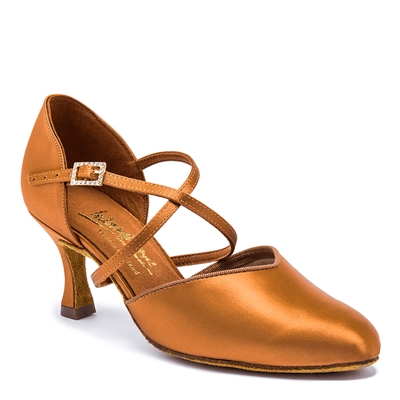
IDS American Smooth Tan Satin - Womens Dance Shoes
Blue Moon Ballroom Dance Supply
$100–$200
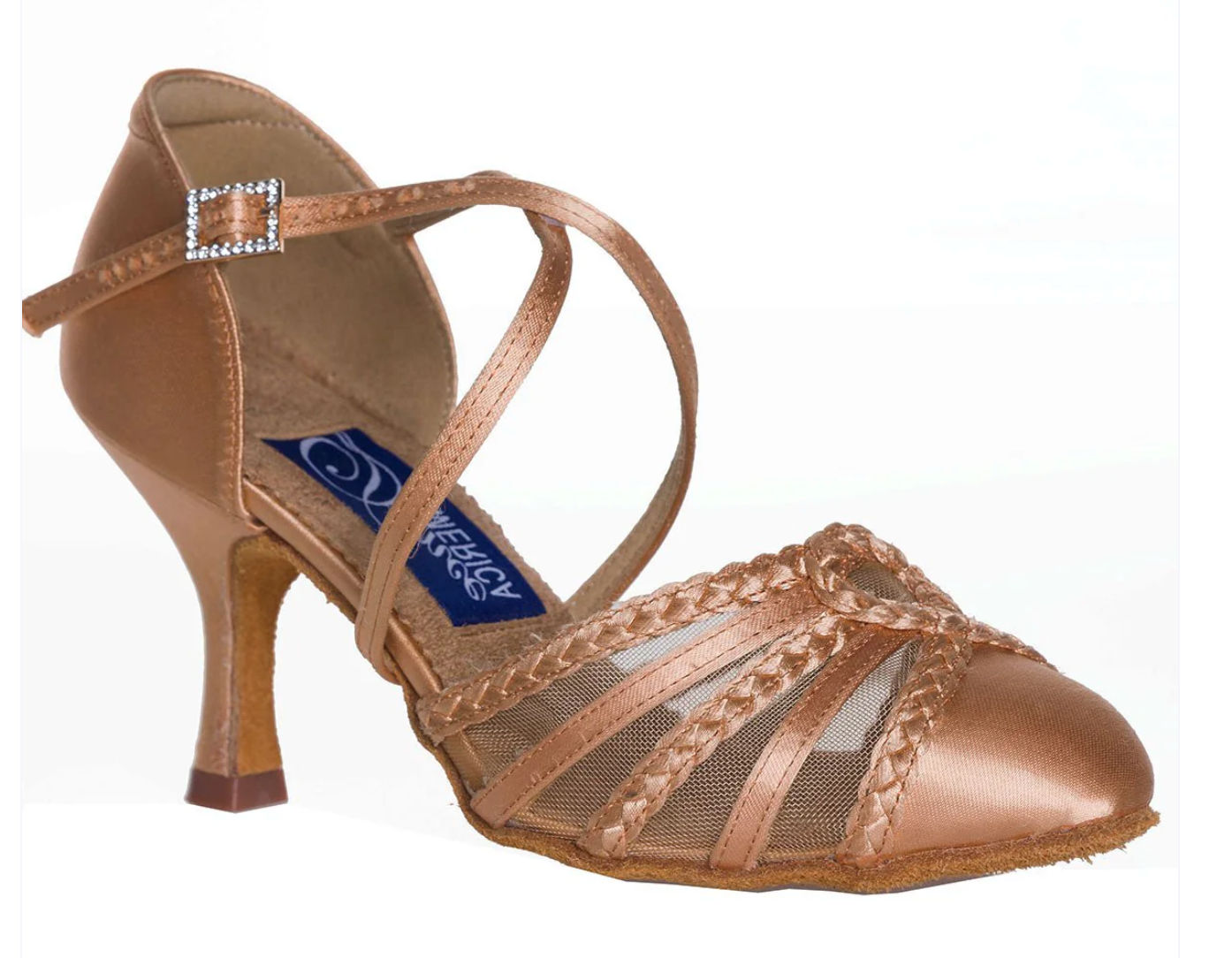
Women's American Smooth Dance Shoes for Competitions & Practice Bronze
Lets Dance Store
$100–$200
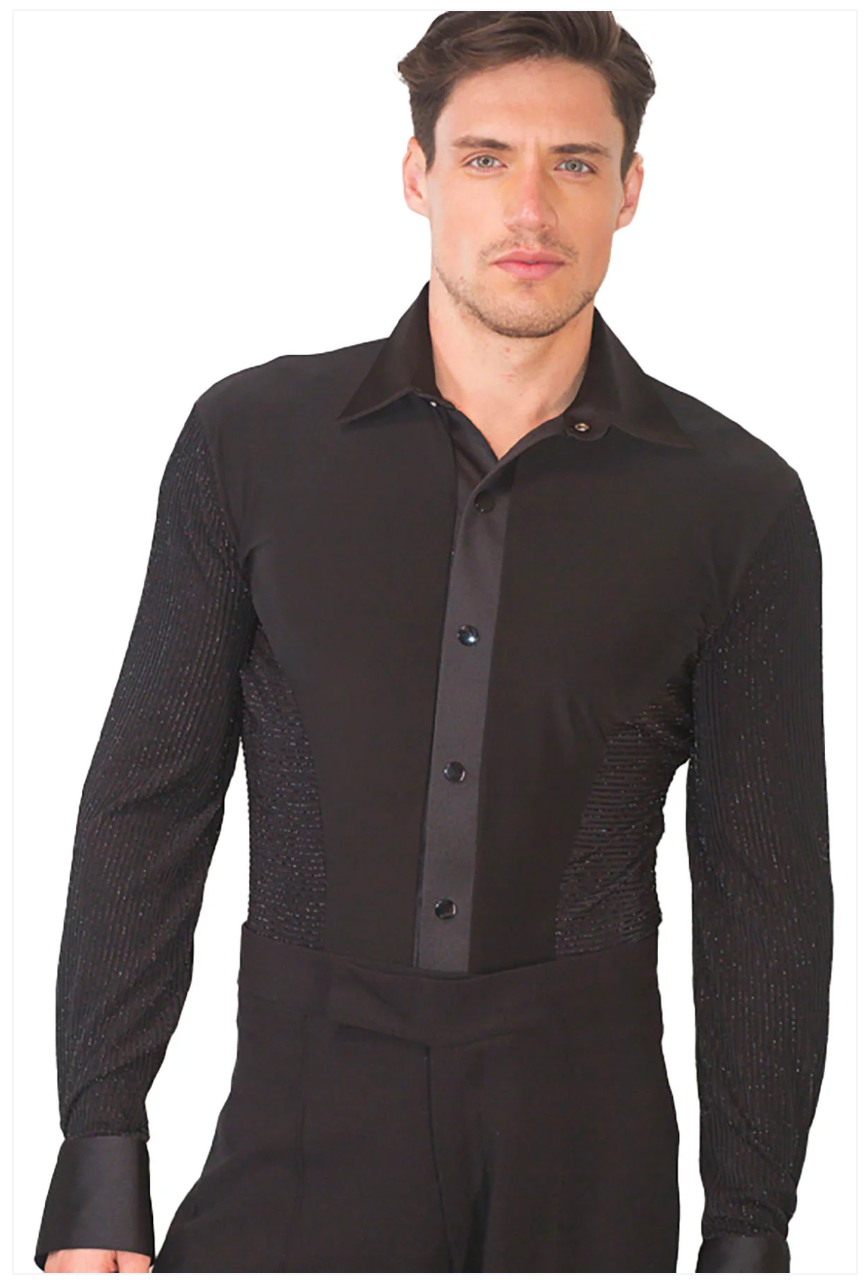
Men's Long Sleeve and Side American Smooth Ballroom Shirt with Trunks
Lets Dance Store
$200–$400
As an Amazon Associate, LODance earns from qualifying purchases. Affiliate disclosure
Sources & Further Reading
Syllabi (instructional standards, not citable sources)
Competitive technique and choreographic standards are maintained by:
- • ISTD (Imperial Society of Teachers of Dancing) and WDSF (World DanceSport Federation) official syllabi and technique manuals
- • DVIDA (Dance Vision International Dance Association) materials for American dance variants
- • USA Dance and other national governing body resources
- • WDC (World Dance Council) competition rules and adjudication standards
Cultural & Historical Context
American Foxtrot emerged from United States during the 1920s—1960s. Understanding the cultural roots, musical traditions, and social circumstances of this era enriches appreciation for the dance's characteristics and significance.
Formative Influences
Codifiers & Standardizers:
Fred Astaire, Arthur Murray, American ballroom teachers, DVIDA (Dance Vision International Dance Association), NDCA (National Dance Council of America), Arthur Murray International, Fred Astaire Dance Studios
Signature Movement Vocabulary:
Feather Step, Three Step, Hover, Weave, Promenade
Primary Source Documents
The Library of Dance contains public-domain primary sources for dance history. Copyrighted modern syllabi are indexed with purchase links to their respective copyright owners. Search by dance name or codifier to discover primary source documents.
Last reviewed: July 2026 — This dance profile synthesizes historical research, cultural documentation, and contemporary practice knowledge to provide authoritative context.
More in American Smooth
American Waltz
American Waltz adapted the International Standard Waltz for American preferences, allowing for greater separation and looser movement while maintaining the fundamental three-quarter rhythm and turning action.
American Tango
American Tango adapted Argentine and International Standard tango for American ballroom contexts, allowing for smooth traveling action and partnership variations while maintaining dramatic character.
American Viennese Waltz
American Viennese Waltz adapted the fast rotational Viennese Waltz for American ballroom, allowing for greater variation while maintaining the characteristic continuous turning action.
American Peabody
Peabody is one of the fastest ballroom dances — a rapid American Smooth dance in 4/4 time danced to fast-paced ragtime music at 240-248 BPM. Dancers frequently pass their feet rather than closing them, allowing for a fast, gliding motion at speeds often exceeding International Quickstep.
What did dancers wear?
American Foxtrot belongs to the Modern Competition (1950s–present) era. See how attire shaped the choreography — and the other way around.
Explore Modern Competition attire →Our Library of Dance corpus skews to historical public-domain sources (pre-1925). Modern competitive technique citations require additional rights-cleared sources — see roadmap.
Continue Exploring
Lineage of Dance
Explore 500 years of dance evolution
Champions of Dance
Winners of marquee national & world titles
Language of Dance
400+ dance terms & translations
Listening of Dance
Tempo, timing & musicality tools
Gallery of Dance
1,200+ public domain artworks
Attire of Dance
Evolution of dance dress across eras