Line Dance
Also known as: Country Line Dance, Western Line Dance
History & Cultural Context
Line dancing's roots run deeper than the country boom that made it famous. Folk traditions of unpartnered group dancing—English country dances, contra forms, and various European communal dances—reached American soil with colonial and 19th-century immigrants, and 1950s and 1960s novelty dances such as the Madison, the Hully Gully, and the Stroll established the modern line-dance template of repeatable, choreographed sequences performed without a partner. The contemporary country line dance crystallized in the 1970s and 1980s, accelerated by the 1980 film Urban Cowboy and a wave of disco line dances that crossed back into country culture. Pioneer choreographer Bill Bader, who began teaching line dancing in the early 1970s with disco material and shifted into country-western forms in Vancouver in 1980, became one of the form's most prolific teachers, with over thirty years of teaching across North America, Europe, and Asia and choreographies including the line-dance set to Asleep at the Wheel's 1990 'Boot Scootin' Boogie.' Other landmark choreographies—Ric Silver's Electric Slide (set to Marcia Griffiths's 1976 'Electric Boogie') and Melanie Greenwood's choreography to Billy Ray Cyrus's 1992 'Achy Breaky Heart'—pushed line dancing into mainstream American culture and exported it worldwide. The 1989 founding of the United Country Western Dance Council in Pennsylvania gave competitive line dance a unified rule set, and the Country Dance World Championships have included line dance divisions every year since 1993 (except 2021). In the 2010s and 2020s the form has continued to expand well past country origins: line dances are now choreographed to pop, hip-hop, K-pop, Afrobeat, and electronic tracks, with viral TikTok line dances reaching audiences who have never set foot in a country dance hall.
Cultural Significance
Line dance is the most democratic form on the country dance floor: no partner required, no role required, and a single shared sequence that anyone can learn and join. That accessibility has made it the connective tissue of country dance halls, wedding receptions, county fairs, and corporate events across the United States, and the form has spread well beyond its origins. After the 1992 mainstream explosion of 'Achy Breaky Heart,' line dance entered American popular culture as a near-universal social activity, and the rise of dedicated line-dance instructors and step sheets distributed online turned what had been local repertoire into a global one. In the 2010s and 2020s, viral choreographies such as the Cha Cha Slide, Cupid Shuffle, Wobble, Cotton Eye Joe, and dozens of TikTok-born sequences have extended the line-dance vocabulary far beyond country music. Internationally, Germany, the Netherlands, the United Kingdom, Japan, South Korea, and Australia maintain dedicated line-dance communities with active teachers and competitions. The form also carries significant cultural weight in African American social dance traditions, where the Electric Slide, the Cupid Shuffle, and the Wobble are wedding and family-reunion staples, and within senior dance and accessibility programming, where line dance offers low-impact group exercise without partner-finding pressure.
Characteristic Movement & Technique
A line dance is built from a fixed sequence—commonly 16, 24, 32, 48, or 64 counts—that repeats throughout a song, often with quarter or half-turns at the end of each repetition that rotate the dancer to face one of two walls (a 2-wall dance) or four walls (a 4-wall dance). Dancers stand in lines or grid formations facing the same direction, and individual ornamentation is generally limited so that the group remains visually unified. The vocabulary draws on a stock of named steps—the grapevine (a sideways step-behind-step pattern), the shuffle (a triple-step with a slide quality), heel and toe touches, coaster steps, kick-ball-changes, pivot turns, and dozens more—that experienced line dancers can recognize on first description and assemble on first hearing. Body styling varies by genre: country line dances tend toward grounded steps and relaxed posture; contemporary fusion line dances borrow Latin hip motion or hip-hop isolations; senior line dances simplify footwork and lower the impact. The collective visual rhythm—a room full of people executing the same step at the same moment—is the form's signature pleasure.
Partnering Dynamics
Line dance is partnerless by definition, but the social dynamics are not solitary. Lines form spontaneously, newcomers tuck in behind experienced dancers to copy footwork, and informal etiquette governs spacing, eye contact, and how to recover gracefully from missed steps. Many line dances assume the dancer will turn to face new walls each rotation, and the convention is to follow the room rather than try to lead it. Couples sometimes line dance together as a social custom, and partner-style line dances—choreographies that include brief held positions or coordinated crosses with the person next to you—have grown in popularity, particularly in Latin and contemporary fusion contexts. Instructors play a quasi-leader role, calling out steps just before they happen and teaching new choreographies through walk-throughs before the music starts. The strongest community norms encourage welcoming behavior toward new dancers, since the form's accessibility is its central value.
Competitive Context
Competitive line dance is governed primarily by the United Country Western Dance Council (UCWDC), founded in 1989 to unify country and western dance competition. UCWDC line dance divisions span Newcomer, Novice, Intermediate, Advanced, and Showcase levels, and the Country Dance World Championships have included line dance every year since 1993 (except 2021). Beyond the UCWDC, the World Country Dance Federation, country dance championships in the UK and Europe, and the Crystal Boot Awards in Britain operate parallel competitive circuits. Outside the country world, line dance also appears in fitness competitions, hip-hop showcases, and K-pop dance covers. Judges evaluate timing, foot placement, body posture, choreographic difficulty, synchronization within team formations, and showmanship. At the elite level, competitive line dancers train at intensities comparable to other competitive dance forms, and choreographers protect their original works through a culture of attribution and step-sheet credit.
Regional Variations
American country line dance, particularly the Texas and Tennessee strains, leans on a grounded, relaxed posture and a steady country tempo. The Cajun and Zydeco line-dance traditions of Louisiana add Caribbean and French Creole influences, including different hip motion and a more bounced step. East Coast and African American line dance communities have produced enduring crossovers such as the Electric Slide, the Cupid Shuffle, and the Wobble, with their own styling conventions. UK and European country line dance is famously meticulous, with strict adherence to choreographer step sheets and a thriving teacher network; British competitions such as the Crystal Boot Awards have produced internationally respected dancers. Asian line-dance scenes—particularly in South Korea, Japan, and Singapore—often blend country with contemporary K-pop choreography and operate large urban dance schools. The 2010s and 2020s have produced an additional global layer of fusion line dances, choreographed to Afrobeat, reggaeton, and electronic tracks, that move freely across cultures via TikTok and YouTube.
Common Misconceptions
The most common misconception is that line dance is exclusively a country phenomenon; the form predates the country boom by decades and now spans virtually every popular music genre. Another is that line dancing is trivial or requires no technique; competitive and instructional line dance demand sharp timing, precise foot placement, and the ability to learn and recall dozens of named steps. Newcomers sometimes assume that any uncoordinated movement in a line is acceptable; experienced communities care about visual unity and reward dancers who match the group's timing and styling. Some assume line dance has no original authorship; in practice, choreographers attach their names to specific dances and a robust step-sheet culture credits original work. Others believe line dancing is a relic of the early 1990s; the form has only grown more popular since, with continuous waves of viral choreographies. Finally, line dance is sometimes dismissed as an entry-level dance for people who 'cannot find a partner'; in practice, even highly skilled partner dancers maintain rich line-dance repertoires precisely because the form rewards musicality, memory, and ensemble feel rather than partnership.
Peak Popularity
Signature Figures
- Grapevine
- Shuffle
- Heel/Toe Touch
- Coaster Step
- Pivot Turn
- Kick-Ball-Change
Notable Codifiers
- Bill Bader (Boot Scootin' Boogie, 1990; pioneer instructor)
- Ric Silver (Electric Slide, 1976)
- Melanie Greenwood (Achy Breaky Heart, 1992)
- United Country Western Dance Council (UCWDC)
- Country Dance World Championships
Track Your Line Dance Progress
Practice Line Dance figures between lessons with Figure Focus — step-by-step breakdowns, floor diagrams, and progress tracking. Free to use.
Watch Line Dance
Line Dance World Championships 2019 Classic Division — World Line Dance Newsletter
What to Wear
Attire guidance for Line Dance and other Country & Western dances. Each card below is sized to the moment — class, practice, social, or competition — because the wardrobe shifts as the stakes do.
Reading the cards
In Class
Casual Western wear. Jeans, boots, plaid or plain shirts. Comfortable and broken-in — the scene is unpretentious.
Social Dancing
Classic Western: jeans, cowboy boots, Western shirts, belt buckles. Women: denim skirts or fitted jeans with boots. The look is part of the culture.
Competition
Polished Western: coordinated outfits, rhinestone-embellished Western shirts, fitted jeans or dance pants, quality boots. Two-step and WCS competitions may differ in dress standards.
Shoes
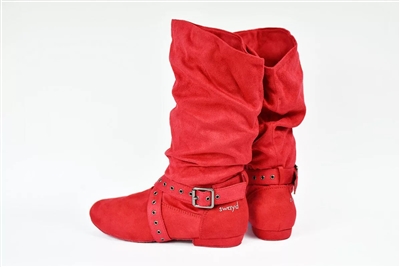
Cowboy boots with smooth leather soles (not rubber-soled work boots). Dance boots with low heels and suede or leather soles. For Two-Step: boots are traditional. For Country WCS: dance shoes acceptable.
In Practice
Broken-in dance boots are essential — new boots blister. Country WCS practice often uses dance sneakers instead of boots once technique gets serious.
By Role
Leaders
Class: Western shirt or fitted T-shirt, jeans, broken-in dance boots. Belt buckle is traditional but avoid anything that digs into your partner during close hold.
Competition: Coordinated Western outfit: rhinestone or embellished Western shirt, fitted dark jeans or dance pants, polished dance boots. Two-Step leans classic cowboy; WCS leans modern and fashion-forward.
Followers
Class: Fitted top, jeans or denim skirt, broken-in dance boots or low dance heels.
Competition: Rhinestone-embellished Western dress or coordinated separates, polished dance boots. Two-Step keeps the traditional Western aesthetic; Country WCS allows more modern styling.
Common Pitfalls
- ✗Rubber-soled work boots — grip the floor and lock the foot.
- ✗Brand-new stiff leather boots without break-in time — blisters within an hour.
- ✗Ranch boots with deep treads — the wrong category of boot entirely; dance boots are smooth-soled.
Price Range
- Budget: Entry dance boots $80–150; Western shirts and jeans from existing wardrobe.
- Mid: Quality dance boots (Tony Lama, Lucchese) $200–400; embellished Western shirts $80–200.
- Premium: Custom dance boots $400–900; rhinestone competition Western shirts $250–700.
Key Terms
- Dance boots
- Western-style boots with smooth leather soles (not rubber treads) — allows sliding, pivoting, and spins on hardwood floors.
- Belt buckle etiquette
- Leaders should check that oversized belt buckles do not dig into the follower during close hold. Smooth, flush-mount buckles are safest.
Quick Tips
- •Suede-soled shoes allow controlled sliding and pivoting — essential for most partner dances.
- •Avoid rubber soles on dance floors; they grip too much and can cause knee injuries.
- •Bring a separate pair of clean shoes for the dance floor to keep it in good condition.
Recommended Gear for Line Dance
Essential equipment and apparel selected for dancers learning Line Dance.
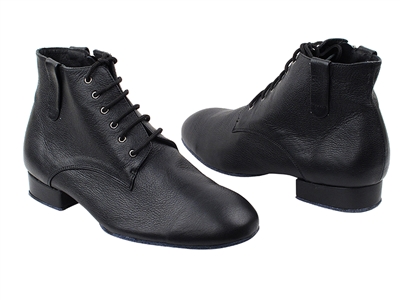
VF Black Leather mens Low Ankle Boot - Dance Footwear
Blue Moon Ballroom Dance Supply
$100–$200
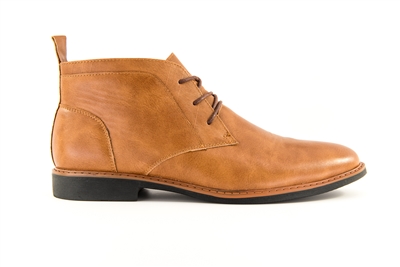
Style GFranco Boston Mens Dance Boot - Gfranco Dancewear
Blue Moon Ballroom Dance Supply
$100–$200
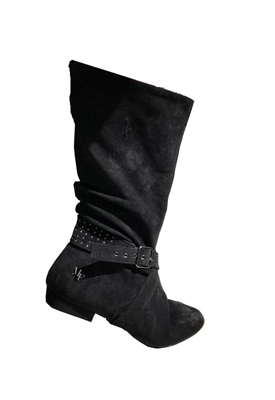
Style MF Aurora Black Dance Boot - Womens Dance Boots
Blue Moon Ballroom Dance Supply
$50–$100
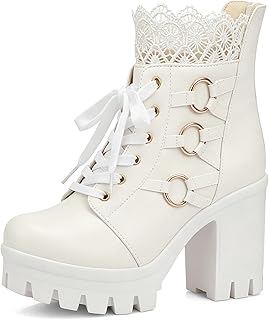
Platform Combat Boots Goth Platform Boots Chunky Heel Ankle Booties for Women Punk Buckle Gothic Boot with Zipper Lace Up Round Toe Dress Shoes Black/White
MEOTINA
Under $50
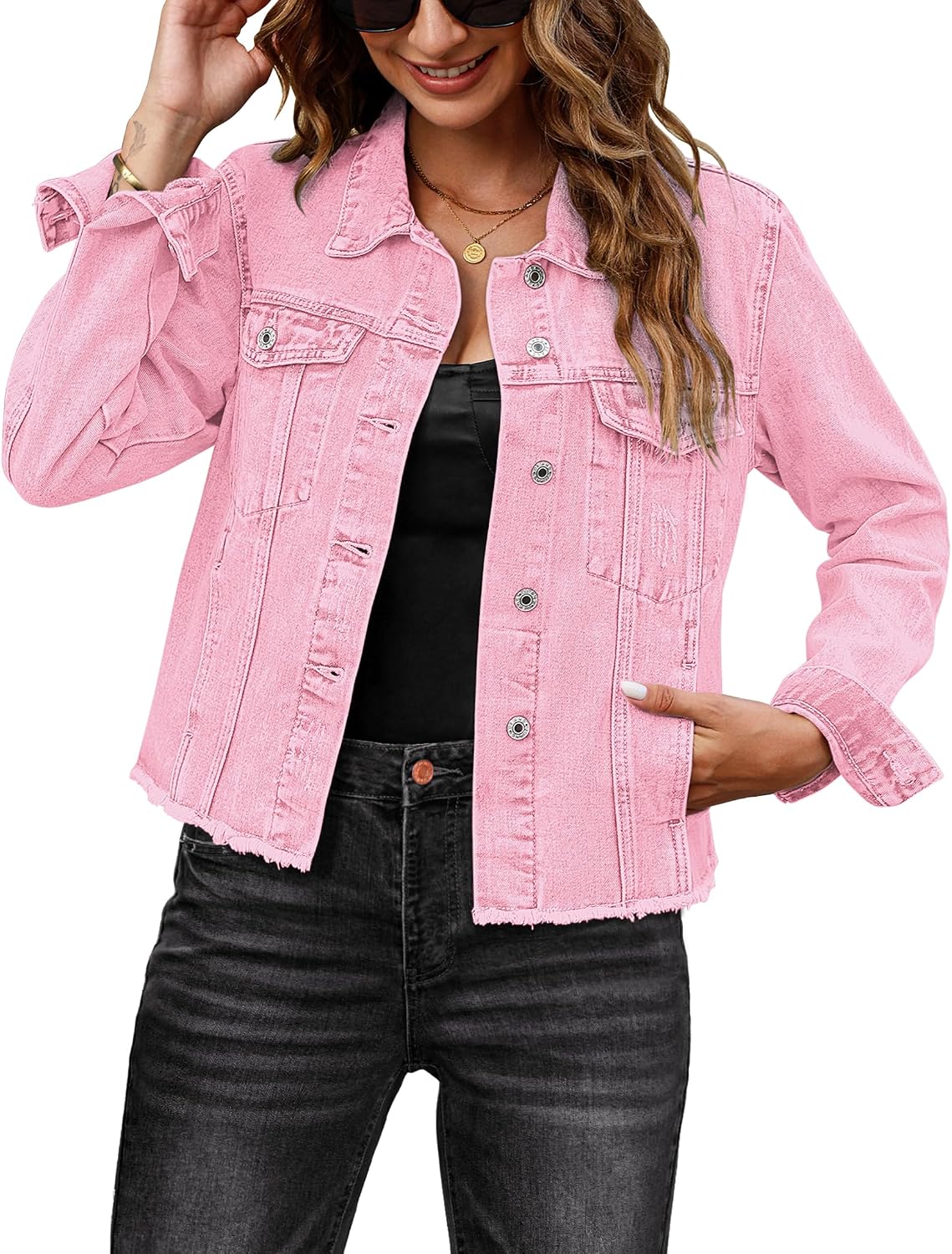
Denim Jacket for Women Distressed Jean Jackets Button Up Vintage Western Trucker Jacket Frayed Hem Pockets
luvamia
Under $50
As an Amazon Associate, LODance earns from qualifying purchases. Affiliate disclosure
Sources & Further Reading
Cultural & Historical Context
Line Dance emerged from United States during the 1970s—1980s. Understanding the cultural roots, musical traditions, and social circumstances of this era enriches appreciation for the dance's characteristics and significance.
Formative Influences
Codifiers & Standardizers:
Bill Bader (Boot Scootin' Boogie, 1990; pioneer instructor), Ric Silver (Electric Slide, 1976), Melanie Greenwood (Achy Breaky Heart, 1992), United Country Western Dance Council (UCWDC), Country Dance World Championships
Signature Movement Vocabulary:
Grapevine, Shuffle, Heel/Toe Touch, Coaster Step, Pivot Turn, Kick-Ball-Change
Primary Source Documents
The Library of Dance contains public-domain primary sources for dance history. Copyrighted modern syllabi are indexed with purchase links to their respective copyright owners. Search by dance name or codifier to discover primary source documents.
Last reviewed: July 2026 — This dance profile synthesizes historical research, cultural documentation, and contemporary practice knowledge to provide authoritative context.
Related Dances
More in Country & Western
Country Two-Step
Country Two-Step is an American couple dance with forward-moving progression and a quick-quick-slow-slow rhythm danced to country and western music. Sometimes called 'the poor man's foxtrot,' it remains the cornerstone of country dance halls across Texas and the American West.
Country Waltz
Country Waltz is the American Western interpretation of the classic 3/4-time waltz, danced in a continuous counterclockwise line of dance to country ballads. It keeps the waltz's romantic character but trades ballroom formality for relaxed posture, looser frame, and unpretentious styling.
Country Polka
Country Polka is the Western American adaptation of the European Polka, featuring a bouncy, traveling two-step pattern danced to lively country music with strong Czech, German, and Polish immigrant influences.
Country Cha-Cha
Country Cha-Cha applies the Cha-Cha-Cha triple step and 4/4 syncopation to country music. It is one of eight competitive dances in the United Country Western Dance Council (UCWDC) couples and pro-am syllabus and is also danced socially at country-western events.
CW Nightclub Two-Step
CW Nightclub Two-Step adapts the smooth, romantic Nightclub Two-Step for country music, creating a versatile slow dance for country-western venues and competitions.
CW West Coast Swing
CW West Coast Swing brings the slotted, elastic West Coast Swing into the country-western context, danced to mid-tempo country music with country-western styling and competitive structure under UCWDC.
Continue Exploring
Lineage of Dance
Explore 500 years of dance evolution
Champions of Dance
Winners of marquee national & world titles
Language of Dance
400+ dance terms & translations
Listening of Dance
Tempo, timing & musicality tools
Gallery of Dance
1,200+ public domain artworks
Attire of Dance
Evolution of dance dress across eras