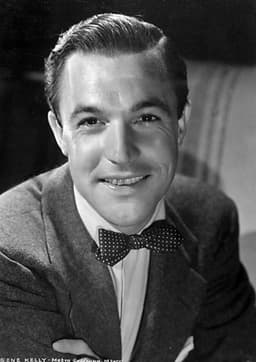
Performer · Choreographer · Film / Screen Icon · Innovator
Gene Kelly
Athletic Film Dance Pioneer
“You dance love, and you dance joy, and you dance dreams.”
Why They Matter
He expanded the possibilities of dance on film, making it more physical, grounded, and accessible to everyday audiences.
Known For
Watch
Gene Kelly — Good Mornin' (Singin' in the Rain, 1952)
Kelly, Donald O'Connor, and Debbie Reynolds in the exuberant 'Good Mornin'' number from the film widely regarded as the greatest movie musical ever made.
Biography
Gene Kelly was born in Pittsburgh, Pennsylvania in 1912. Unlike the aristocratic elegance of Astaire, Kelly brought a working-class athleticism and everyman charm to dance on film. He trained in a family dance school and worked his way to Broadway, where his breakthrough role in Pal Joey (1940) led to a Hollywood contract.
Kelly's approach to film dance was revolutionary: he wanted dance to feel like something any man might do, not a rarefied art. He blended ballet's line and elevation with tap's rhythmic precision and acrobatic physicality, creating a uniquely cinematic style. He also directed and choreographed many of his own numbers, taking control of camera placement and editing to serve the dance.
His masterworks include the title number from Singin' in the Rain (1952), widely considered the greatest dance sequence in film history, and the 17-minute ballet in An American in Paris (1951). Both films demonstrated that dance could carry narrative weight and emotional complexity equal to dialogue or music.
Kelly received an Honorary Academy Award in 1952 for his contributions to the art of choreography on film. His influence extends through music videos, modern film dance, and anyone who believes that dance on screen should feel joyful, accessible, and cinematically alive.
Career Highlights
Broadway breakthrough in Pal Joey
Cover Girl introduces his innovative dance-on-film style
On the Town brings dance into real New York locations
An American in Paris wins Best Picture; 17-minute ballet
Singin' in the Rain; Honorary Academy Award
Directs and choreographs television specials
Legacy & Impact
Gene Kelly democratized dance on film, making it physical, joyful, and accessible to ordinary audiences. His insistence on location shooting, athletic choreography, and integrated storytelling expanded what film dance could achieve. He proved that a man could dance with total abandon and still project strength and masculinity, opening the door for generations of male dancers in popular culture.


Explore More Legends
Discover the dancers, teachers, choreographers, and cultural icons who shaped how the world moves.