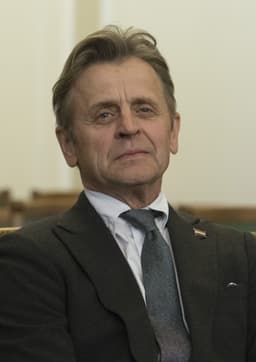
Performer · Stage Icon · Innovator
Mikhail Baryshnikov
Ballet's Greatest Defector
“I do not try to dance better than anyone else. I only try to dance better than myself.”
Why They Matter
He brought ballet to mainstream audiences and demonstrated that male dance could combine power, grace, and emotional depth at the highest level.
Known For
Watch
Mikhail Baryshnikov — Legendary Solos (Don Quixote / Giselle)
Baryshnikov's virtuosity on full display — jumps that seem to pause in midair and turns of impossible speed and control.
Mikhail Baryshnikov — The Turning Point Solos
Baryshnikov's spectacular solo dancing from The Turning Point (1977), the film that introduced his artistry to a mass American audience.
Biography
Mikhail Baryshnikov was born in Riga, Latvia in 1948 and trained at the Vaganova Academy in Leningrad under the legendary Alexander Pushkin. By his early twenties, he was the Kirov Ballet's brightest star, but the Soviet system's restrictions on artistic freedom drove him to defect to Canada during a 1974 tour.
In the West, Baryshnikov's technique stunned audiences and critics alike. His jumps seemed to pause in midair, his turns were impossibly fast and controlled, and his dramatic range surpassed what Western audiences expected from a virtuoso. He joined American Ballet Theatre, quickly becoming its principal dancer and later its artistic director (1980-1989).
Baryshnikov's impact extended far beyond ballet. He starred in the films The Turning Point (1977) and White Nights (1985), appeared on Sex and the City, and founded the Baryshnikov Arts Center in 2005 to support multidisciplinary artists. His willingness to work with modern choreographers like Twyla Tharp and Mark Morris showed a restless artistic curiosity.
His defection and subsequent career made him perhaps the most famous male dancer in the world, bringing ballet into mainstream cultural conversation and proving that male dance could combine supreme athleticism with profound artistry.
Career Highlights
Joins the Kirov Ballet as soloist
Defects to Canada during Bolshoi tour
Academy Award nomination for The Turning Point
Becomes Artistic Director of ABT
Founds White Oak Dance Project with Mark Morris
Opens the Baryshnikov Arts Center in New York
Legacy & Impact
Mikhail Baryshnikov brought ballet to mainstream audiences and demonstrated that classical dance training could be a springboard for endless artistic exploration. His defection became a symbol of artistic freedom during the Cold War, and his career showed that the greatest dancers never stop evolving. He remains the standard by which male ballet dancers are measured.


Explore More Legends
Discover the dancers, teachers, choreographers, and cultural icons who shaped how the world moves.