International Cha-Cha-Cha
Also known as: Cha-cha, Cha Cha
History & Cultural Context
The Cha-Cha-Cha developed in Cuba during the 1920s-1950s as Cuban musicians and dancers adapted the Mambo rhythm, creating a slower, more accessible dance for social settings. The dance gets its name from the distinctive 'cha-cha-cha' sound created by the feet striking the floor with each triple step. Enrique Jorrín, a Cuban bandleader and composer, is credited with formalizing the cha-cha-cha around 1954. Unlike the complex syncopation of the Mambo, the Cha-Cha-Cha features a straightforward rhythm with a characteristic three-step 'cha-cha-cha' action on the final beat, making it immediately accessible to dancers of all levels. When codified for International Latin competition in the 1960s, the Cha-Cha-Cha maintained strong Cuban motion, hip action, and a playful, flirtatious character. Its accessibility, fun nature, and popularity in television dance shows made it one of the most popular social Latin dances. The cha-cha-cha bridge Cuban social dancing and competitive ballroom while remaining beloved in contemporary club and wedding settings worldwide.
Cultural Significance
The Cha-Cha-Cha became a cultural bridge between Latin and Western ballroom worlds. Its arrival in Europe and North America during the 1950s-1960s coincided with the Latin music boom, and it quickly became a staple of television dance shows and ballroom competitions. The dance's playful nature and accessibility made it a favorite for social dancing and partner beginners. Its popularity in contemporary dance halls and wedding celebrations demonstrates its enduring appeal.
Characteristic Movement & Technique
International Cha-Cha-Cha is characterized by the distinctive 'cha-cha-cha' rhythm that creates sharp, staccato hip action responsive to the musical beat. The dance features the characteristic 'check' action where dancers rapidly shift weight without fully transferring it, creating sudden directional changes. The movement emphasizes the Cuban motion—hip sway created through knee action—that defines all Latin dances. The footwork is executed close to the floor with rapid weight changes creating the rhythmic, percussive quality of the dance. The movement includes characteristic traveling patterns performed in open position allowing for arm styling and personal expression. The upper body remains relatively upright while the hips execute pronounced Cuban motion. The overall movement quality is rhythmic, energetic, and responsive to the musical phrasing of the cha-cha music.
Partnering Dynamics
International Cha-Cha-Cha is danced primarily in open position with partners maintaining connection through hand holds or arm contact rather than closed position. The lead-follow relationship is maintained through clear hand signals and frame pressure. The leader guides the follower through directional changes and timing of the characteristic rhythm patterns. Partners often separate during the dance, executing individual styling while coordinating the fundamental rhythm and choreographic figures. The dance allows for significant individual interpretation and styling within the partnership framework. Partners maintain communication through hand holds and eye contact rather than upper body frame contact. The partnership is characterized by coordinated timing, clear leading and following through hand connections, and the ability to maintain synchronized rhythm despite separation and individual styling.
Competitive Context
International Cha-Cha-Cha is one of the five International Latin dances competed at all levels of ballroom competition under WDSF and WDC governance. Competition occurs at amateur preliminaries through professional world championships. Dancers progress through bronze, silver, and gold levels with increasingly complex choreography at higher levels. International Cha-Cha-Cha is known for fast-paced, energetic competition performances that emphasize the distinctive rhythm patterns and Cuban motion. Professional Cha-Cha-Cha competition features dynamic performances with complex footwork and creative choreography. Judges evaluate technique, choreography, timing, partnership, and presentation. The dance remains popular in professional exhibition contexts where performers create exciting, contemporary interpretations while maintaining the essential cha-cha rhythm.
Regional Variations
While International Cha-Cha-Cha maintains standardized technique, regional coaching schools develop distinctive approaches to the rhythm patterns and choreographic construction. Cuban dancers, reflecting the dance's origins, sometimes emphasize more pronounced hip motion and Cuban characteristics. Eastern European dancers have developed approaches emphasizing very sharp, precise footwork articulation. Different schools vary in how they construct choreography and emphasize particular figures. Professional exhibition Cha-Cha-Cha often incorporates contemporary Latin music and theatrical elements while maintaining core Cha-Cha-Cha technique. Some contemporary performers explore musical interpretation and artistic expression that expand traditional boundaries while maintaining recognizable Cha-Cha-Cha rhythm patterns.
Common Misconceptions
A common misconception is that Cha-Cha-Cha is a slow, sensual dance; in reality, the characteristic rhythm pattern and fast tempo create an energetic, playful quality. Another misconception is that Cha-Cha-Cha requires flamboyant hip action; in fact, the hip motion is a natural byproduct of proper footwork and knee action rather than an intentional hip exaggeration. Some people incorrectly believe that Cha-Cha-Cha is primarily a women's dance because of the hip action; the dance requires equal technical skill and strength from both partners. A frequent misconception is that the 'cha-cha-cha' rhythm must be strictly locked to the musical beat; in reality, dancers interpret the rhythm within musical phrasing. Finally, people often incorrectly believe that Cha-Cha-Cha technique is simpler than other Latin dances; the distinctive rhythm and sharp footwork require significant technical skill.
Peak Popularity
Signature Figures
- Basic Step
- Shoulder Check
- Hand to Hand
- Three Cha Cha
- Hockey Stick
- Spiral Turn
Notable Codifiers
- Imperial Society of Teachers of Dancing
- Cuban dance masters
- Enrique Jorrín
- ISTD (Imperial Society of Teachers of Dancing)
- WDSF (World DanceSport Federation)
- WDC (World Dance Council)
Dance Lineage
Track Your International Cha-Cha-Cha Progress
Practice International Cha-Cha-Cha figures between lessons with Figure Focus — step-by-step breakdowns, floor diagrams, and progress tracking. Free to use.
Watch International Cha-Cha-Cha
Cha Cha Amateur Latin Final WDSF Russian National Championship 2023 — WDSF DanceSport
What to Wear
Attire guidance for International Cha-Cha-Cha and other International Latin dances. Each card below is sized to the moment — class, practice, social, or competition — because the wardrobe shifts as the stakes do.
Reading the cards
In Class
Form-fitting practice wear that allows full range of motion. Women: crop tops, leggings, or short practice skirts. Men: fitted shirts and stretchy trousers.
Social Dancing
Dressy and expressive. Women: short dresses, fitted skirts, heels. Men: open-collar shirts, slim trousers. Latin nights are typically high-energy and fashion-forward.
Competition
Women: highly embellished Latin dresses, typically short, with fringe, crystals, and cutouts. Men: fitted Latin shirts and high-waisted trousers, increasingly embellished at higher levels. Skin-toned underlayment is common.
Shoes
Women: strappy Latin sandals with 3–3.5" heels, suede soles. Men: Latin shoes with 1.5" Cuban heels. Ankle straps recommended for women in fast dances.
In Practice
Form-fitting from the first lesson. Leaders in a tight practice tee or Latin shirt and stretchy trousers — judges and partners need to see weight changes through the standing leg, hip rotation, and ribcage movement. Followers in crop top and leggings or short practice skirt; many add a coin hip scarf for early Cuban motion training. Practice shoes match competition shoes by category — buy Latin, not all-purpose.
By Role
Leaders
Class: Fitted practice shirt or tight T-shirt tucked into stretchy trousers. Loose tops hide the technique a teacher needs to see.
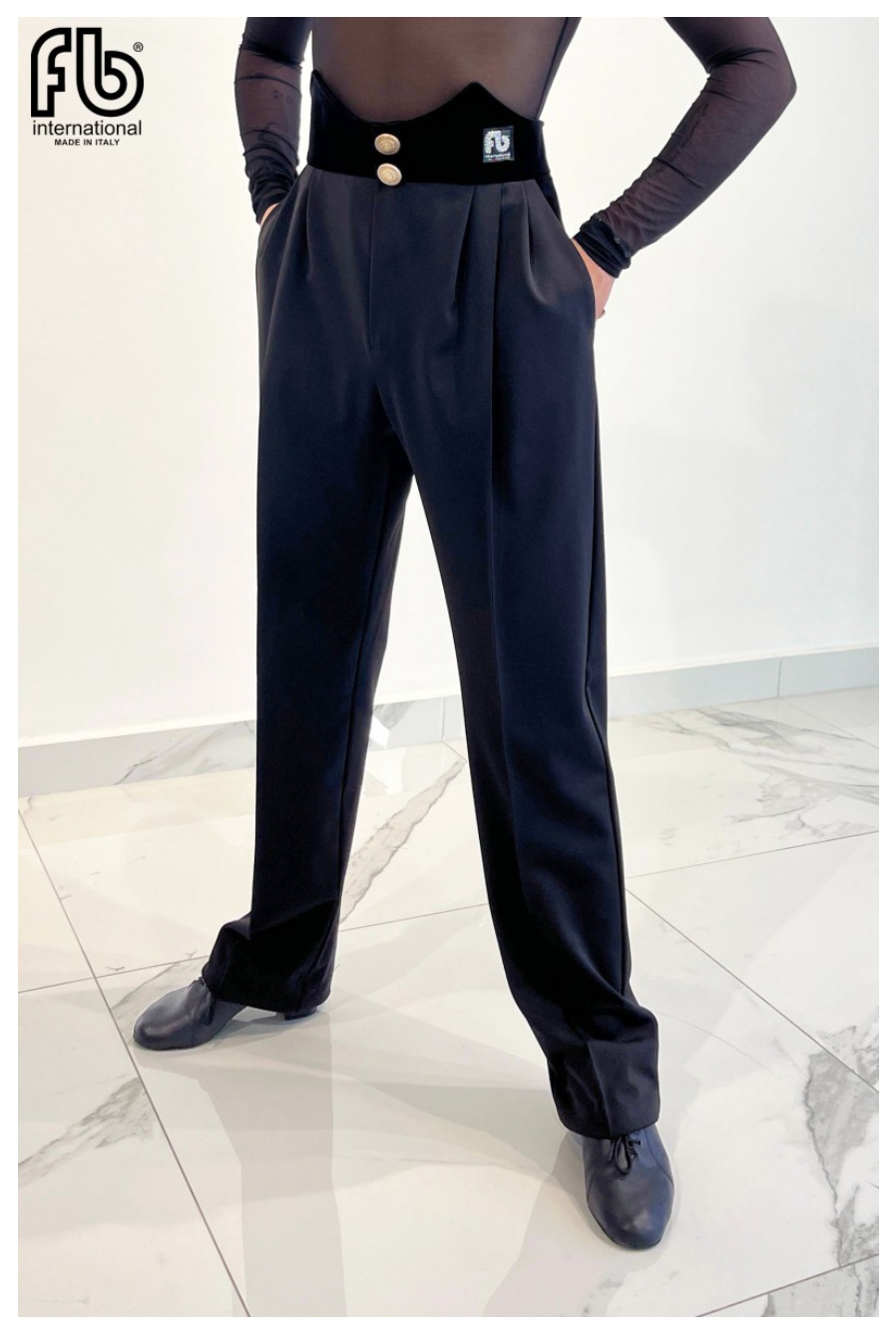
Competition: Fitted Latin shirt (open-collar or V-neck), often in stretch fabric. Long sleeves, sometimes loose at the wrist for line in arm extensions. Black is the workhorse but Latin welcomes color. High-waisted trousers held by suspenders or elastic waistband — never a belt. Slim through the thigh, slightly flared at the ankle for clean leg line during walks and lunges.
Followers
Class: Crop top, fitted tank, or sports bra with leggings or a short practice skirt. Hair pulled back. Ankle-strap practice heels.
Competition: Short, fitted, lavishly embellished dress — rhinestones, fringe, sequins, cutouts, asymmetrical drape. Hemline above the knee, often well above. Fringe is a technical asset: it moves a half-beat after the hip, visually doubling every Cuban motion. Skin-toned underlayment standard at higher levels. Hair tight and slicked, often a low bun or ponytail.
Common Pitfalls
- ✗Wearing American Rhythm shoes (2.5–3" heel) to International Latin events — the half-inch shifts your center of gravity wrong.
- ✗Loose, draped men's shirts — they hide every piece of technique a judge is grading.
- ✗Belt instead of suspenders or elastic waistband — breaks the line and lets the shirt untuck.
- ✗Rubber-soled shoes — grab the floor at Latin tempo and heel height; injury risk is high.
Price Range
- Budget: Practice wear $40–100; entry-level Latin shoes $90–150.
- Mid: Off-the-rack Latin dresses $400–1,200; men's Latin shirts and trousers $200–500; mid-tier shoes $180–280.
- Premium: Custom Latin gowns $3,000–10,000+; bespoke men's competition kit $600–1,200; premium shoes $280–420.
Key Terms
- Cuban heel
- 1.5" angled heel on men's Latin shoes, designed for the ball-flat pressing action of Latin technique.
- Fringe (as technical asset)
- Decorative strands that lag a half-beat behind the hip, amplifying Cuban motion at distance for the judge.
- Skin-toned underlayment
- Nude mesh inserts that turn cutouts into structured panels, anchoring the dress during fast spins and large arm movements.
- Strappy ankle-strap heel
- Open-toe Latin sandal with 3–3.5" heel and ankle strap — the strap is what keeps the foot inside the shoe during pivots at that heel height.
Quick Tips
- •Suede-soled shoes allow controlled sliding and pivoting — essential for most partner dances.
- •Avoid rubber soles on dance floors; they grip too much and can cause knee injuries.
- •Bring a separate pair of clean shoes for the dance floor to keep it in good condition.
Recommended Gear for International Cha-Cha-Cha
Essential equipment and apparel selected for dancers learning International Cha-Cha-Cha.
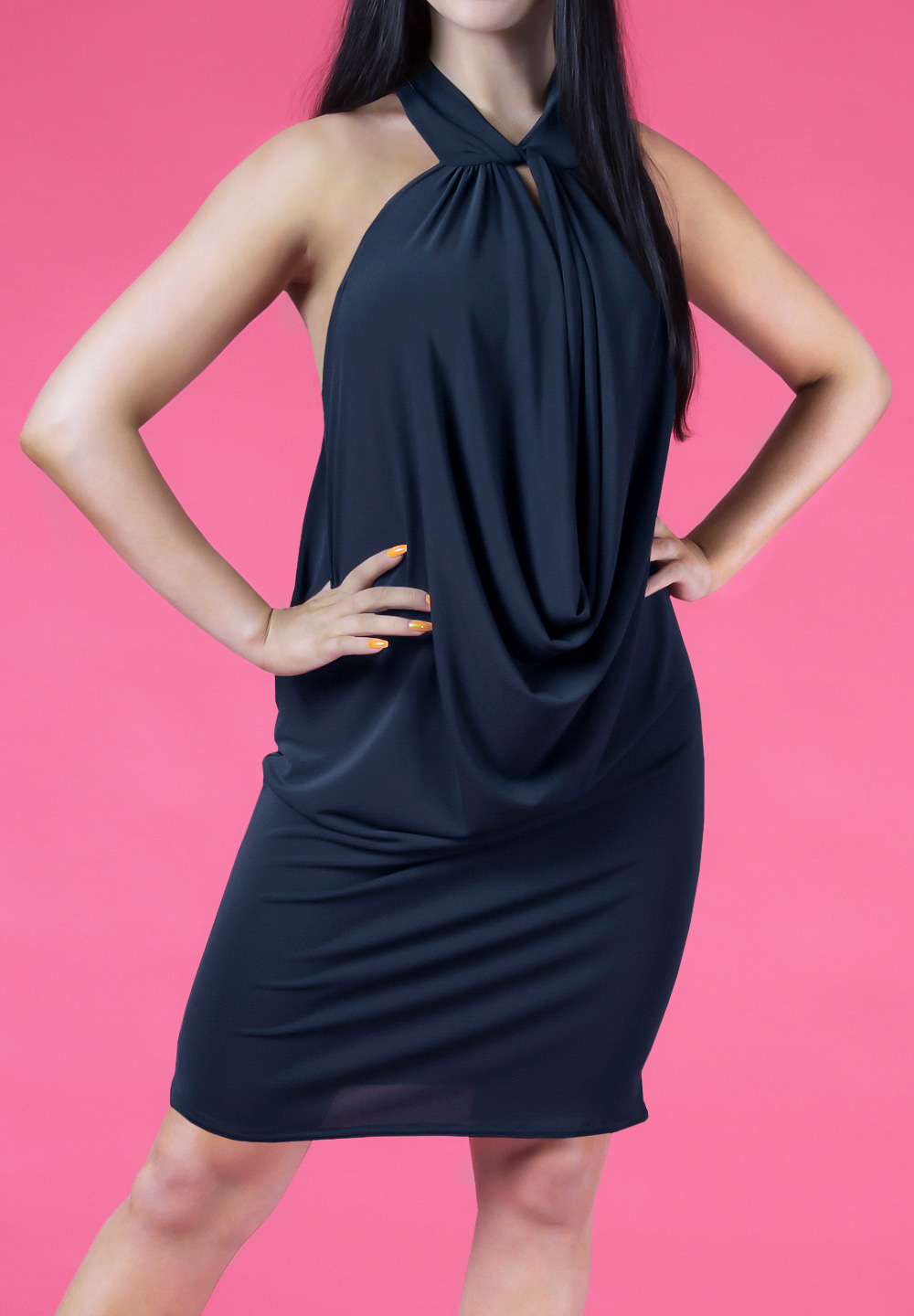
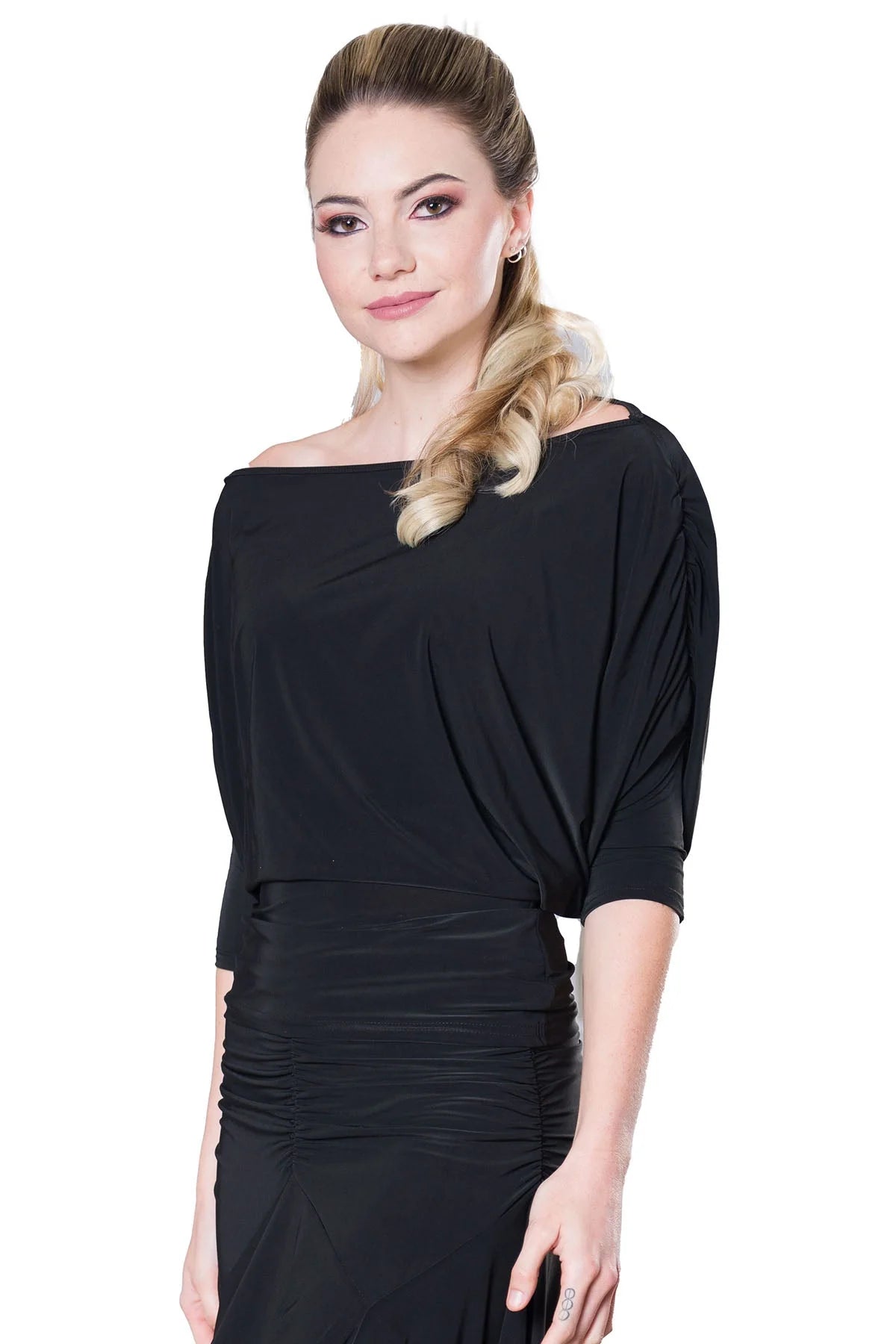
Women's Ballroom, Latin, American Rhythm, Tango, Salsa Dress Top
Lets Dance Store
$100–$200
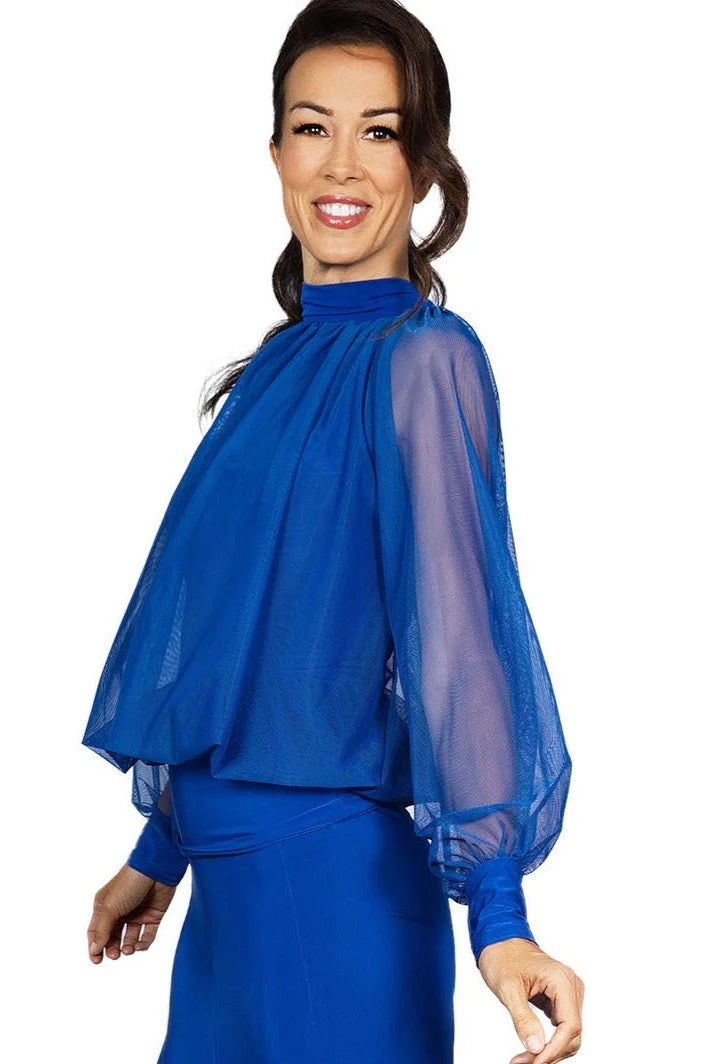
Women's Ballroom, Latin, American Rhythm, Tango, Salsa, Practice Demure Powermesh Top
Lets Dance Store
$100–$200
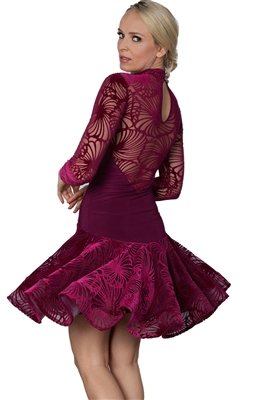
Dance America D2410 Short Velvet Burnout Latin Dress - Womens Dancewear
Blue Moon Ballroom Dance Supply
$200–$400

As an Amazon Associate, LODance earns from qualifying purchases. Affiliate disclosure
Sources & Further Reading
Syllabi (instructional standards, not citable sources)
Competitive technique and choreographic standards are maintained by:
- • ISTD (Imperial Society of Teachers of Dancing) and WDSF (World DanceSport Federation) official syllabi and technique manuals
- • DVIDA (Dance Vision International Dance Association) materials for American dance variants
- • USA Dance and other national governing body resources
- • WDC (World Dance Council) competition rules and adjudication standards
Cultural & Historical Context
International Cha-Cha-Cha emerged from Cuba during the 1950s—1954s. Understanding the cultural roots, musical traditions, and social circumstances of this era enriches appreciation for the dance's characteristics and significance.
Formative Influences
Codifiers & Standardizers:
Imperial Society of Teachers of Dancing, Cuban dance masters, Enrique Jorrín, ISTD (Imperial Society of Teachers of Dancing), WDSF (World DanceSport Federation), WDC (World Dance Council)
Signature Movement Vocabulary:
Basic Step, Shoulder Check, Hand to Hand, Three Cha Cha, Hockey Stick, Spiral Turn
Primary Source Documents
The Library of Dance contains public-domain primary sources for dance history. Copyrighted modern syllabi are indexed with purchase links to their respective copyright owners. Search by dance name or codifier to discover primary source documents.
Last reviewed: July 2026 — This dance profile synthesizes historical research, cultural documentation, and contemporary practice knowledge to provide authoritative context.
More in International Latin
International Samba
Samba originated in Brazil as a fusion of African rhythms and European dance traditions, featuring the characteristic swaying hip action called 'samba bounce.' When codified for ballroom competition, it became a showcase for Cuban motion and rhythmic complexity.
International Rumba
Rumba evolved from Cuban son and Spanish guitar traditions, featuring the characteristic Cuban motion, slow sensual rhythm, and emphasis on hip action. It became the romantic centerpiece of ballroom Latin competition.
International Paso Doble
Paso Doble, literally 'double step,' takes its bullfight theme and pasodoble music from Spain, but the partnered ballroom dance itself was developed in France (the figure names — sur place, huit, coup de pique — are French). It was adapted for International Latin competition and is built on a distinct two-step march rhythm with a dramatic, theatrical character.
International Jive
Jive evolved from African-American swing traditions and jitterbug, featuring energetic kicks, flicks, and a bouncy character. When adapted for ballroom competition, it became the fastest and most playful of the Latin dances.
What did dancers wear?
International Cha-Cha-Cha belongs to the Modern Competition (1950s–present) era. See how attire shaped the choreography — and the other way around.
Explore Modern Competition attire →Our Library of Dance corpus skews to historical public-domain sources (pre-1925). Modern competitive technique citations require additional rights-cleared sources — see roadmap.
Continue Exploring
Lineage of Dance
Explore 500 years of dance evolution
Champions of Dance
Winners of marquee national & world titles
Language of Dance
400+ dance terms & translations
Listening of Dance
Tempo, timing & musicality tools
Gallery of Dance
1,200+ public domain artworks
Attire of Dance
Evolution of dance dress across eras